
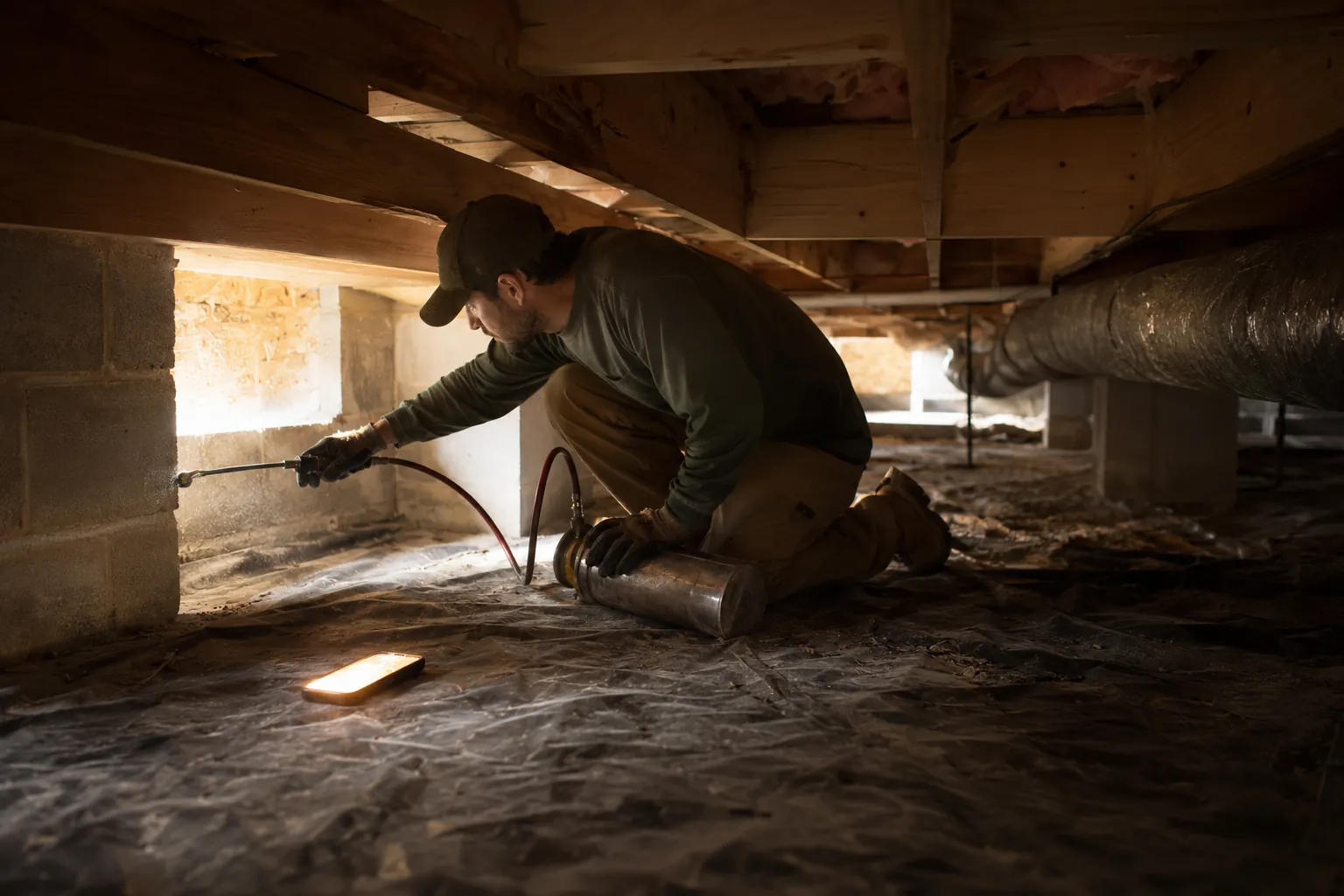
You are on your back in a crawlspace, sprayer in one hand, flashlight in the other, eye to eye with whatever the homeowner called about. The phone in your pocket starts buzzing. You cannot answer it. You finish the job, climb out covered in dust, and there is a missed call with no message.
A missed call is an unanswered request, but you cannot know from the screen alone whether it would become a job. A clear callback list gives you a next step when you finish.
Before starting a job, decide where missed calls will go and when you will review them. If you work with someone who handles calls, agree how urgent or unclear requests reach you.
Why the missed call hurts so much in pest control
A caller may be worried about a pest problem, but the next step depends on the pest, location, and your service area. Ask for those details before saying what treatment or visit you can provide.
Some callers leave a message and some do not. Use a greeting that asks for their name, callback number, address, and a short description of the issue.
Review your call log at the end of the day. Note which requests you returned, how long it took, and what happened next. That gives you a baseline for changing your callback routine.
You cannot answer with your hands full
This is the part no productivity tip fixes. When you are under a house or balanced on attic joists, you physically cannot take the call. There is no app that turns you into two people. Hiring someone to sit by the phone is real money for a one-truck operation, and even then they miss calls when they step away.
You may not be able to answer safely in that moment. Set up a clear way to record the request, then review it when you can pause work. If someone else handles calls, agree when they should reach you about urgent or unclear requests.
That is the whole idea behind an answering setup that catches inbound for you. We walk through the concept in plain terms in our guide to what an AI receptionist does, and how the pieces fit together in how SvarKlar works.
What actually catches the lead
Requests may arrive by phone, text, web form, or message. Decide which channels you can monitor and when you will review each one. A written reply is a different task from answering a live call.
If a caller says someone was stung and has trouble breathing, or a child or pet swallowed bait or spray, the first reply should tell them to call 911 (or Poison Control at 1-800-222-1222 for a swallowed poison) before any intake question.
SvarKlar answers your calls and messages, and a caller it misses gets a text back within seconds. That reply does not confirm a visit unless you have asked for booking.
If your order includes intake, it can ask what pest the customer saw, the address, access details, and callback time. You decide which requests need review and which booking tasks are included.
Choose a response goal your shop can keep. The reply-time guide explains the difference between a practical target and the limits of published research.
Set a clear after-hours callback plan
If you take after-hours work, say when someone will review a message and what callers should do if the issue cannot wait. Do not suggest that a text reply means a technician is available.
If your shop does not handle after-hours service, make that clear in the greeting and give a true callback window. See after-hours pest calls for more intake guidance.
This is not another lead seller
If you use a paid lead service, review its current sharing, billing, refund, and cancellation terms. Keep the terms with your own contact and job records so you can compare what you paid for with what you received.
SvarKlar is not a lead seller. It can help handle the written inbound tasks named in the written order. Our lead-plan guide explains how to compare those tasks with other sources.
Choose useful intake questions
A short intake can ask what the customer saw, where it is, and when they can take a callback. Price and treatment advice may need your review, depending on the pest and the details shared.
We get into the tricky pricing piece, what to say and what to hold, in giving a pest price over the phone. The short version is that you control what it shares.
Review your callback steps before busy periods
Before a busy period, look at your own call log by week, channel, and pest type. Note how many requests are still waiting at the end of each day and which intake details were missing. Use that list to improve your questions and callback plan. The busy-season guide has a seasonal planning checklist.
Review the callback steps before demand rises, then update them from your records. The rest of our pest control guides covers related intake tasks.
How SvarKlar is built
Frederik builds and runs each setup around the work named in its written order. Agree on the channels, intake tasks, and next steps before setup.
That is the underdog version. One person who sets it up, tunes it to sound like you, and stays on the hook for it. Not a faceless platform that signs you up and vanishes.
Keep a short callback list with the pest, address, access details, and a time to follow up. Review it when you can safely pause work, and pass anything unclear to yourself for a decision.
Want to see how it would catch your inbound on a busy day? Book a call or see how the service works.
More guides like this are collected in SvarKlar Resources.