
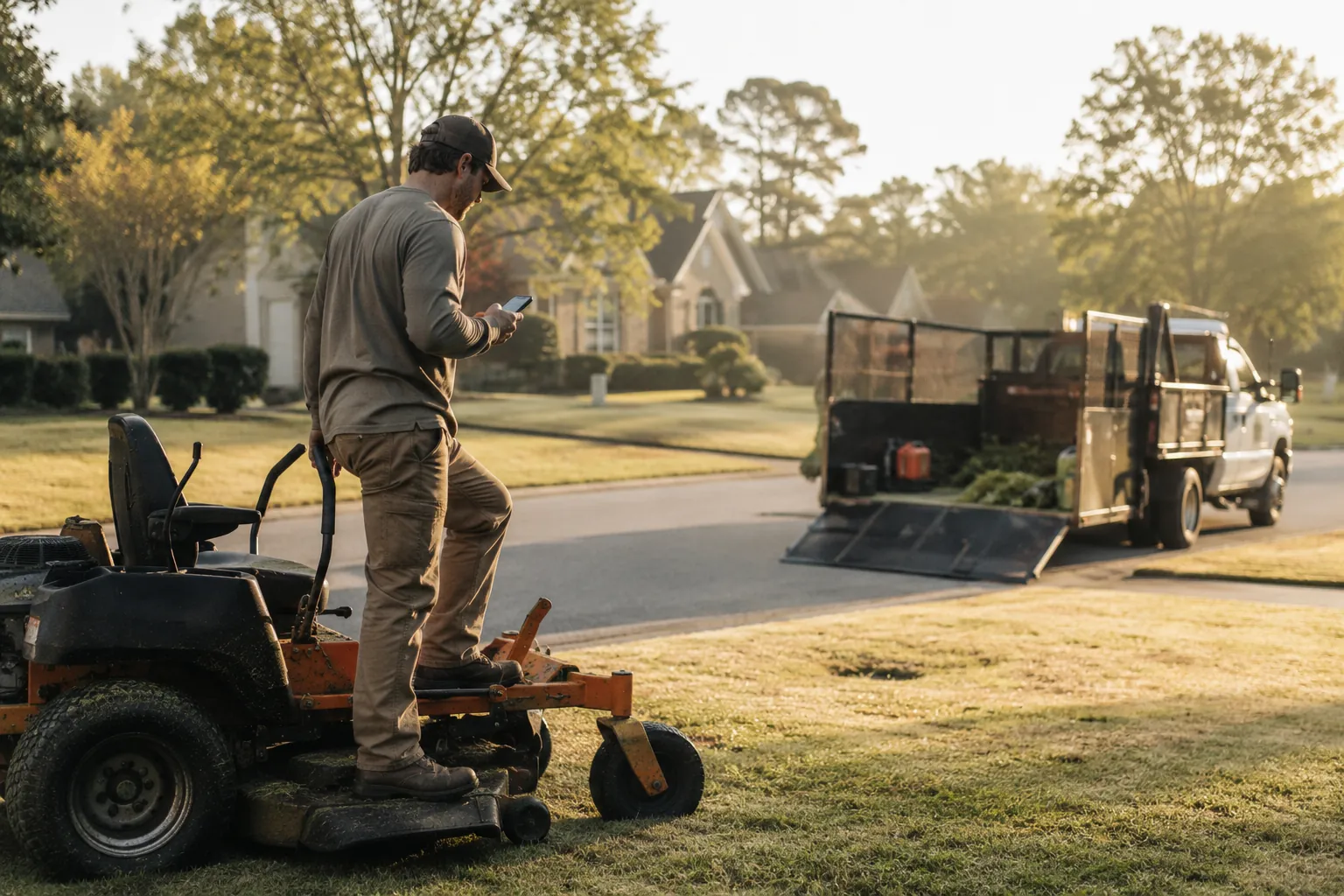
A customer you have cut for three summers needs Thursday's visit moved to Friday. They call at ten past eleven, when the crew is on the third property of the route. Nobody picks up, and the request waits for the afternoon.
Two kinds of people could have made a call like that. One found your number online last night and has never used you. The other has it saved under your name. The first may try the next crew on the list. The second is more likely to wait, and may remember that nobody answered.
The gap sits in the middle of the route
Jen McDonald, co-founder of the garden design and installation company Garden Girls, described the three partners' hours in an Authority Magazine interview: “we're in the field from 8am-2pm. Computer work is done in the afternoons.”
Our read: on a day like that, no call lands at a good time. The office part of the day starts after the phone has already rung. That is how a route works, not a flaw in how you run it. The fix is to give those calls an answer before the afternoon arrives.
What each caller gets back
SvarKlar answers calls and messages in your crew's own words. A new caller gets the questions that make a visit worth booking: the street address, what the job is, roughly how big the yard is, and how soon they want it done. A regular who texts a small change gets a reply that the message arrived and that you will confirm.
A regular needs a different kind of reply. The case for the repeat customer is in paid leads against your own list. Here the point is the phone.
Our read: a customer who knows your name and gets no answer to a plain request, a changed day or a gate code, is checking whether the crew they trust is still paying attention. A short text that says the message arrived settles that.
Either way, a person finishes the job. Your crew confirms the visit or the callback before any slot is promised, and anything urgent or odd comes to you with the whole thread.
The two o'clock list
By the time you sit down with the phone, the work is half done. Each missed caller already has a note: who rang, what they wanted, and the address if they gave it. You start with the regulars who need a quick yes, then work through the new callers who are ready to book a visit. Nobody needs a cold call back from a number you do not recognize.
Where the owner's seat moves
As a crew grows, the owner spends less time on the mower and more time selling and running people. That shift, and what it does to the phone, is the subject of the one-crew shop that is booked solid. Until then you are the mower, the sales call and the office, and the text back keeps the phone from being a fourth job.
To put a number on what rings out, count the unanswered calls in a normal week and multiply by your usual job. We lay out that sum in the cost of missed calls, and the whole setup is in how SvarKlar works. What that setup costs is on the AI receptionist pricing page.
Is this your route?
It fits if the field takes most of your day, your regulars have your number, and a few new jobs a month go to whoever answered first. It does not fit if your office is staffed through the day already.
Rain and wind change the shape of this problem, and the storm week is covered in catching the storm cleanup rush. Callers who ask for a price before you have seen the yard are the subject of the landscaping quote checklist.
The route will always pull you away from the phone. A reply that goes out while you are on the hedge keeps the regular feeling looked after and gives the new caller a reason to wait for you.
Want to see how it would work around your route? Book a call or see how the service works.
More guides like this are collected in the landscaping resource hub.