
A text arrives at lunch: “Need a quote for my yard.” It gives no street and no job, and says nothing about size. You could be pricing a weekly mow or a full redesign, and nothing in the message says which.
Two kinds of quote request
Some jobs are the same visit every week, on a lawn that can be sized before anyone drives out. Others only make sense once somebody has stood on the ground. Treating them alike is how you end up over-driving on the first kind and under-measuring the second.
Rob Palmer's Lawn Squad runs the first kind from the desk. He told UpFlip: “When the customer calls, we pull up the address and identify the square feet of the lawn while talking to the customer. ...”
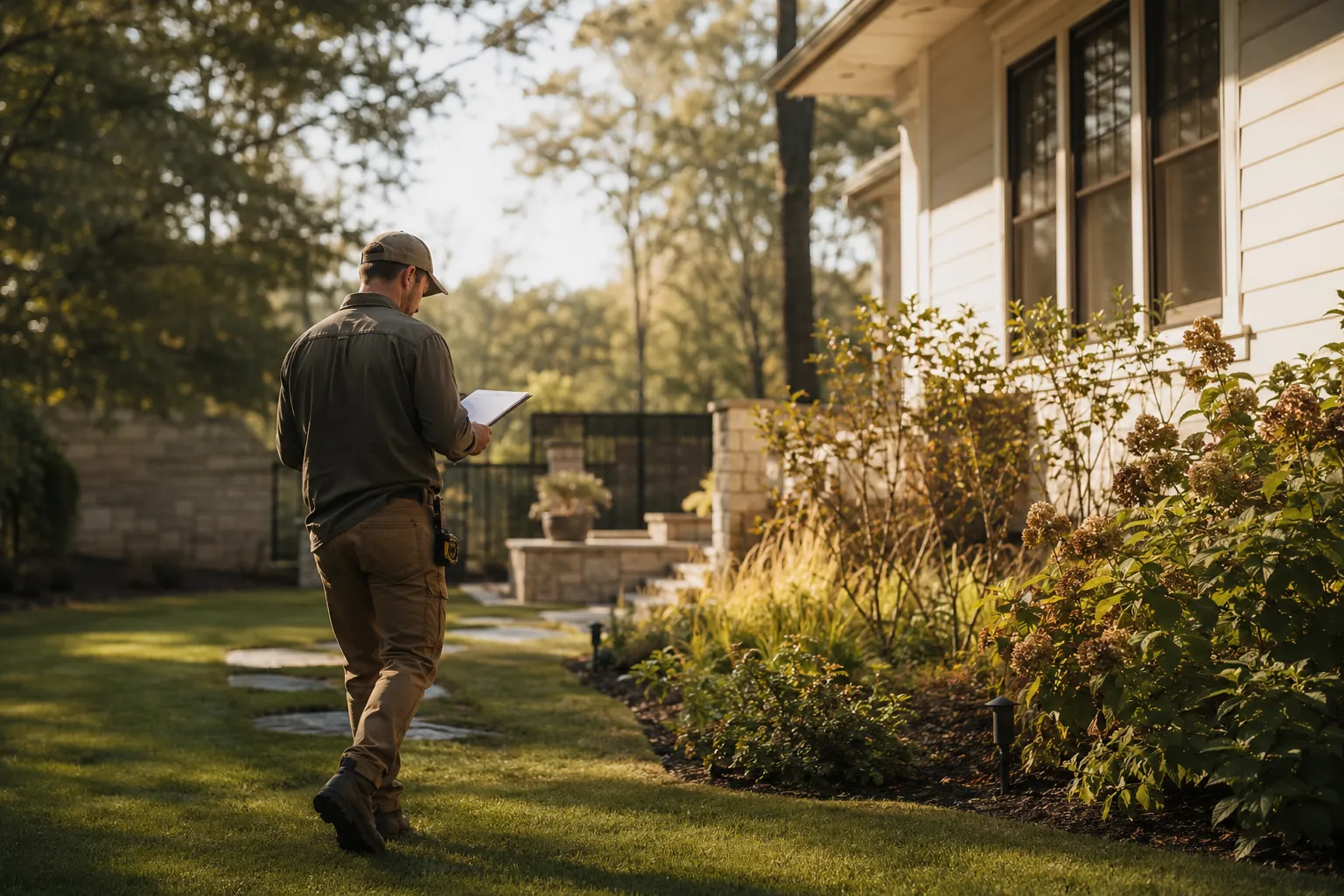
Brian Linson of BL Landscapes works the other way for projects. He told UpFlip: “Go out and get your numbers down when you're bidding projects. Don't be afraid to walk around and measure everything out.”
Our read: the two owners are not disagreeing. A defined lawn service can be priced from the address. A bid for a custom project needs a walk around the property.
What the address can tell you
A map gives you the size of the lawn and the shape of the lot, which is the part of a routine job that sets the price. It does not show the sticking gate, the steep side, the bed that has been left for two seasons or the strip no mower can reach. If the job is a plain repeat cut, those details change little. If it is a bed rebuild, a retaining wall or a new lawn, they are most of the cost.
That gives you a simple test. If the work stays the same from visit to visit, price from the address. If the ground decides the work, the number waits for the walk.
When to walk first
Anything that is built, planted or reshaped goes on the walk list: new installs, drainage, grade changes, large clean-ups and any job with tricky access for equipment. The visit is not a delay. It is where the quote gets made, and a caller who is willing to book a time may well be serious about the work.
Ask the caller to be there for it, or to mark out what they want. Then say that you will give the figure after you have seen and measured the site, and put a time on the visit in the same message.
Requests that arrive with nothing to sort
Some requests are not ready for either path. A message with no address, no scope and no timing gives you nothing to price from, and nothing to plan a walk around.
The answer is a short set of questions before any figure: the address, the job in the caller's words, roughly how big, and how soon. SvarKlar asks those by text or web form within seconds of the message landing, and passes you the answers. Speed matters here too, and how fast to reply to leads covers why. A person still chooses the path and sets the price. What that costs is on the AI receptionist pricing page.
A rule you can keep in the truck
Price from the address when the job is a repeat service, a lawn you can measure on a map, or a scope the caller has made clear. Walk it first for new installs, slopes, drainage, hard access and anything that must be built or fixed. Ask before you decide when a request does not say which of the two it is.
The same questions help when callers reach you in the middle of a route, which is the topic of texting back landscaping callers on a route day.
Does your work split this way?
It fits if you mix routine lawn work with project bids and your phone gets both. If everything you sell is a repeat service, you can price almost every request from the address and the walk-through step shrinks to the odd exception.
Some jobs need a number by the end of the call, and some need a pair of boots on the ground. Sorting them quickly is what stops either one from costing you money.
Curious what a first reply to your own requests would ask? Book a call or see how the service works.
More guides like this are collected in the landscaping resource hub.