
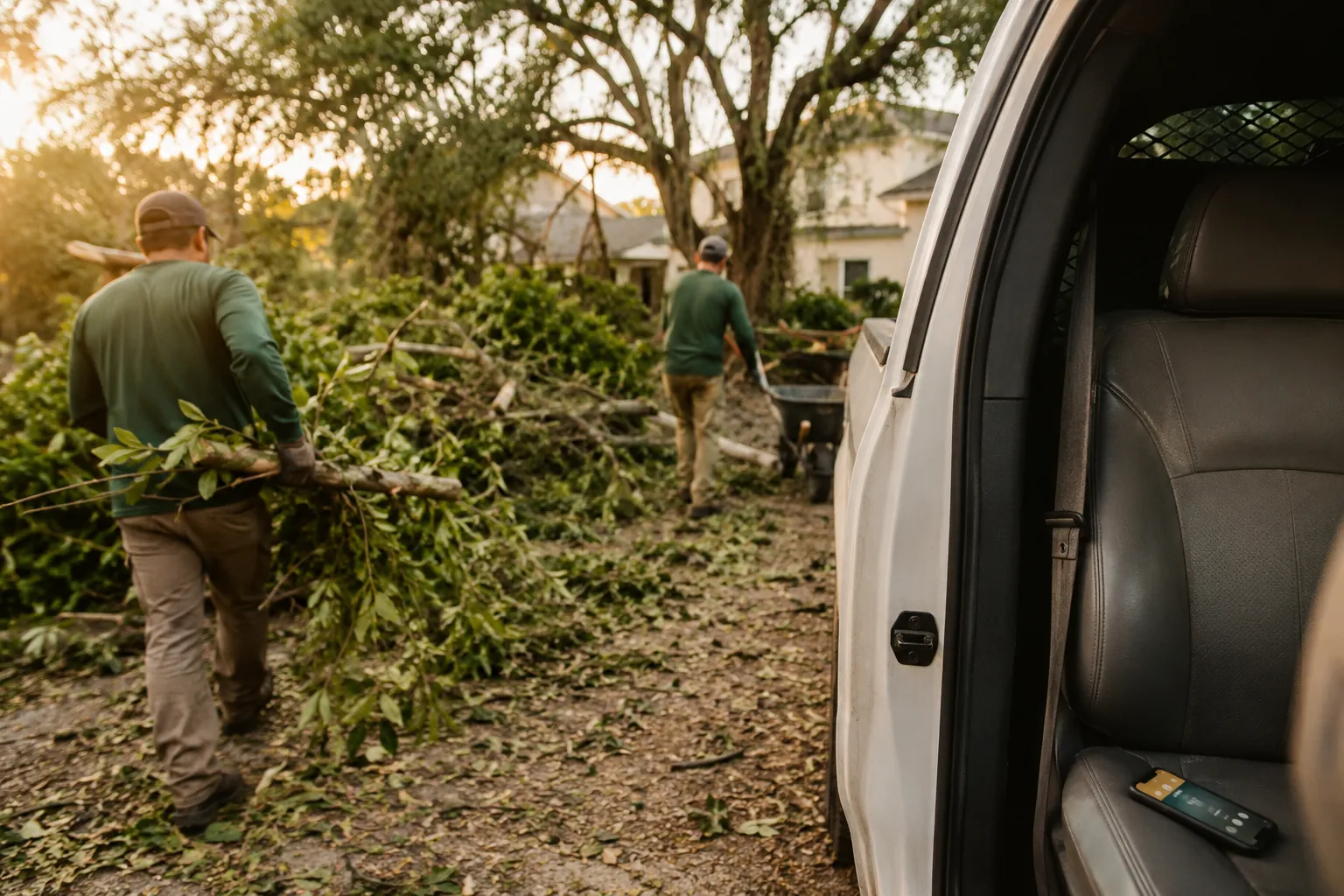
The wind dies down, the rain stops, and your phone starts going off before the driveway has even dried. A tree is down across a fence, a flower bed is standing in water, and a dozen “can you look at my yard” texts are rolling in from people who watched a neighbor's crew already show up. For a couple of days it may not let up, and then it eases.
That shape is the whole problem. A slow week gives you time to return calls between jobs, a storm gives you none, and every call that goes unanswered in that window is a caller who may well dial the next name on the list within the hour, because their neighbors may have the same problem right now. That is the same lost-job math we walk through in the cost of missed calls.
Safety comes first
Before any intake question, a caller near danger needs the get-safe step. Once you set your emergency rules, SvarKlar's first reply to a caller with a tree down on or near a power line tells them to stay well clear of the tree and the line and to call 911 or the power company first. For a tree on a house or a car with someone in or near it, it tells them to keep everyone clear and call 911. Only then does the job get flagged to you.
The crew and the equipment set the limit
A storm adds calls, not trucks, chainsaws or hours of daylight. What your crew and equipment can clear in a day is the real limit, and a faster phone does not move it. Decide before the storm how many cleanups a day you will take, and the plan can stop offering slots at that number.
After the safety step, sort the calls by what blocks the job. A blocked driveway needs a person to review access and capacity. Loose branches that can wait go into the normal quote queue. Ask for the address, what fell, and whether a vehicle or entrance is blocked.
What the text back does during the rush
SvarKlar answers calls with AI, texts back missed callers and answers texts and forms in seconds, any hour. What it costs is on AI receptionist pricing.
It collects what happened, where, and what the caller sees, and the report goes to you ahead of the routine ones. A person on your crew confirms the visit once they know what the job needs and whether the truck can reach it.
Triage matters more than speed alone
During a rush, a report about a tree on a roof needs a person's attention before a routine yard request. A crew member checks the facts and decides what can be taken that day. The same intake questions help outside storm season too, as covered in the landscaping quote checklist.
Callbacks once the roads clear
Requests that did not fit the week stay on a short list. Note who needs a callback after the roads clear, and ask before adding any work to a later route. That gives callers a real next step and keeps this week's capacity separate from next season's enquiries.
Is this you?
It fits if a storm or a spring flush has buried your phone. Before the next surge, agree which channels get a reply, who reviews urgent reports, and when to stop offering slots.
Before the next storm, agree who checks new requests, what the first reply says and when to stop offering slots. A useful reply gives the caller a clear next step.
Want to see how it would handle a surge week for your crew? Book a call or see how the service works.
More guides like this are collected in the landscaping resource hub.