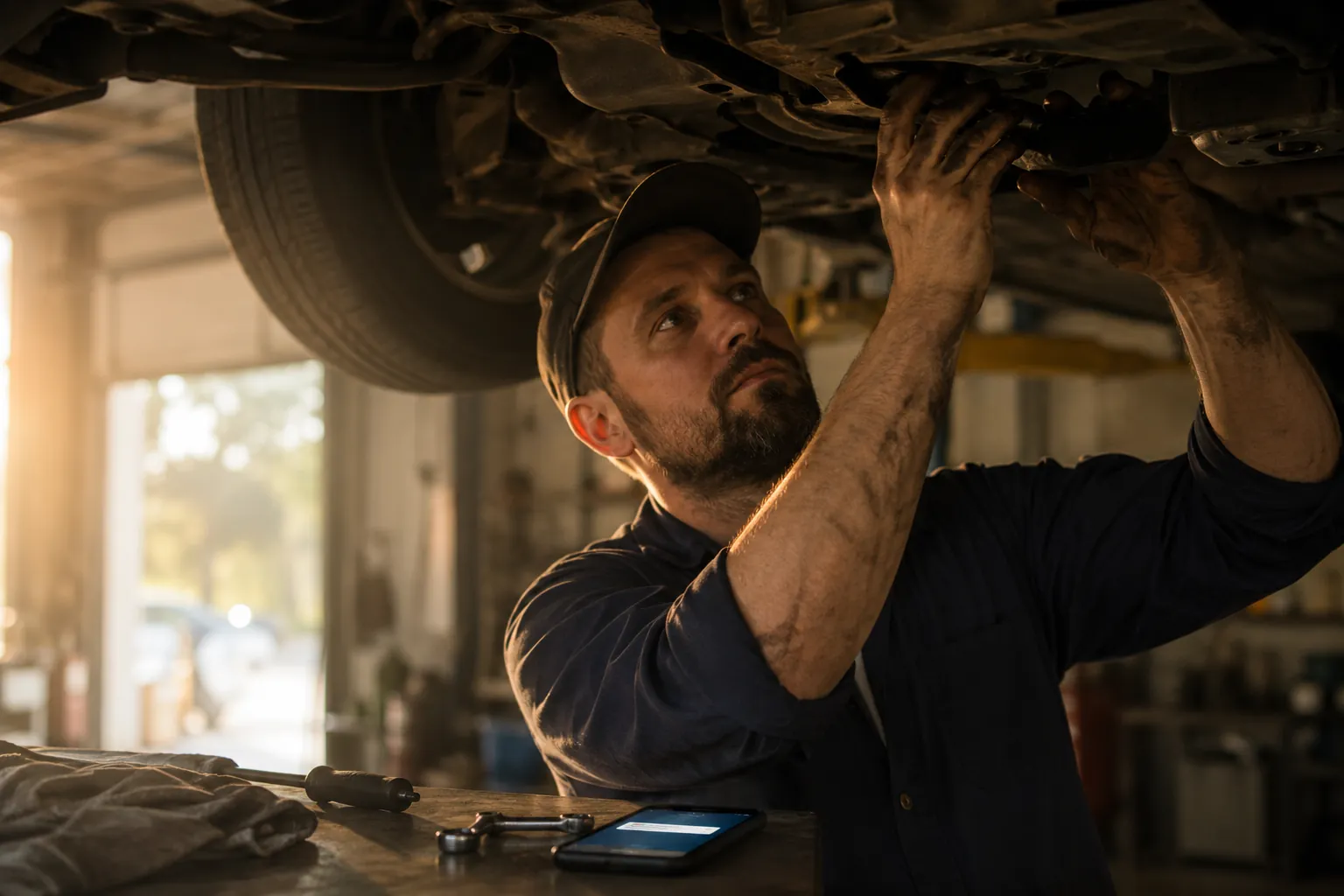
You are under a lift with both hands black. The phone on the bench starts ringing. You cannot stop mid-job, and there is no one up front to grab it. So it rings out. The customer hangs up and dials the next shop on Google.
That is not a price problem or a skill problem. It is a coverage problem. In a shop like yours the best person to answer is the same person turning the wrench, and that person is busy. A lot of calls to a busy shop go unanswered during business hours, and every one of them is a job that almost came in.
The missed call is a missed repair order
Chris Shamis runs Dakota Ridge Auto outside Denver. He puts the loss plainly. When a call gets fumbled or missed, he told Ratchet+Wrench, the customer might say “OK, I’ll call you back,” and “next thing you know, you’ve lost that opportunity with that customer.” They do not call back. They are already talking to someone else.
Put a dollar figure on it. A missed call is not a missed conversation. It is roughly one repair order out the door. Miss two or three a week and you can do the math on what the phone is costing you.
Shamis ties the call straight to the sale. “Answering a phone correctly should be the easiest way to gain new customers,” he says. “People buy from people they trust. If they don’t trust you, they’re not going to agree to a $500 repair.” The catch is that you have to actually answer first.
Why “just hire someone” does not fix it
The obvious answer is a front-desk person. For a one or two bay shop, the math rarely works. That is a full salary for someone who steps away to lunch, takes a day off, and still cannot cover nights or weekends. Plenty of shops end up with a phone tree and a voicemail box instead, which is the exact loop your customer hangs up on.
A robot phone line is the other pitch you have heard. Be careful there. A bot that picks up the line, mangles a customer name, and guesses a price on a job it does not understand can lose you more work than the missed call did. Most customers can tell, and most would rather deal with a person. Pretending a machine is a person is a fast way to break trust on the first touch.
So the winning move is to catch the lead on the channels you can win, and to keep a real human in the loop where it counts.
Catch the text, the web form, and the missed caller
Here is the part that matters for a shop with greasy hands. SvarKlar answers on the channels you can win. It replies to your text, web form, and direct message leads in seconds, around the clock. And when a call comes in that nobody could grab, it texts that caller right back before they settle on the next shop.
That covers the way people reach a shop now. Someone fills out the form on your site at 9 PM. Someone texts “is my car ready?” while you are elbow deep. Someone calls, gets no answer, and would have given up, except a text lands a few seconds later asking how the shop can help. The lead that used to vanish gets answered, and you never had to wipe your hands.
It does not stop at “thanks, we got your message.” It asks the things a shop needs. The year, make, and model. The problem. Whether the check engine light is on. How soon they need it in. Then it books the visit or sets a clear callback time and hands you a tidy note instead of a stack of voicemails.
A human still triages the job
Auto repair has a wrinkle that software has to respect. You often cannot let a customer book themselves, because nobody knows yet how long the job runs. Lucky Sing, who owns Lucky’s Auto Repair, says it straight in an UpFlip interview. “With auto repairs, you can’t let customers book their own appointment because they don’t know how long it will take. So we have our customer manager Rich approve it or contact them.”
That is the design. SvarKlar gathers the facts and warms the lead up. Anything urgent, odd, or out of its lane goes straight to you with the full context, so the call you take is one worth taking. You stay the one who approves the booking. The tool just makes sure the lead is sitting there, answered, when you look up from the bay.
It also screens the noise. Eric Reich, who bought Bennett’s Automotive, was floored, he told Tekmetric, by “the number of unsolicited calls from random companies trying to sell or sign me up for something.” A tool that handles the inbound text and form traffic keeps the junk off your bench so the real jobs get through.
How the call gets handled still decides the sale
Answering is step one. How you answer is what closes. Todd Hayes, who runs operations at Adams Automotive in Houston, told Ratchet+Wrench that “how you represent your company over the phone determines whether or not they’ll buy from you.” Get the call right and almost nobody walks.
A fast, clear, useful first reply does the same job for a text or web lead. The customer gets a real answer in seconds, in your shop’s voice, asking the right questions. That beats a voicemail beep every time, and it beats a competitor who got back to them an hour later. If you want the targets on response time, we cover them in how fast to reply to leads.
Speed to lead: the first shop to reply wins the job
A driver with a dead car does not wait around for a callback. They text two or three shops at once and go with whoever answers first, often within minutes. SvarKlar answers every text and missed call in seconds, so your shop is usually the first reply the driver sees, not the fourth one that shows up an hour later. Reply first often enough, and price stops being the thing that decides the job.
What this is worth to your shop
Most independents live on word of mouth and referrals. A big share of people lean on a friend or family recommendation when picking a shop. When that much of your work walks in on a referral, a dropped call is a wasted referral. Someone trusted enough to send a customer your way, and the customer could not get through.
And the office side is most of the job anyway. One shop owner nailed it on The Garage Journal forum. “Fixing cars is not the same thing as running a business.” Catching every lead is business work, not wrench work, and it is the part that quietly drains a shop. We added up the full hit in the cost of missed calls, and it is usually bigger than owners guess.
Stack it up and a tool like this does a few things at once. It catches the after-hours web lead that used to die overnight. It texts back the caller you could not reach. It never takes a salary, a lunch, or a day off. If you want the plain-English version of the whole idea, start with what an AI receptionist does or the longer what is an AI receptionist.
How SvarKlar is built
This is not big software you fight with for six months. Skip the enterprise onboarding, skip the contract that locks you in, and adding another tech never means a bigger bill. Fred builds it for your shop and runs it himself. It is set up around how your shop actually works, the questions you ask, the way you book, the jobs you want flagged. You can see the mechanics in how SvarKlar works.
That is the underdog version. One person who sets it up by hand, tunes it to your voice, and stays on the hook for it. Not a platform that signs you up and disappears.
Is this you?
It fits if a few of these ring true. You miss calls because both hands are on a car. You know good jobs slip away when no one is up front. You have lost work to the shop that simply answered first. You cannot justify a front-desk salary, but the phone keeps ringing.
The fix is not answering more calls yourself. You cannot, and you should not have to climb out from under a car for every ring. The fix is making sure the text, the web lead, and the missed caller all get a fast, real answer while you keep working. Status checks eating your bench time are their own drain, and we tackle that in when status check calls eat the whole day. The booking side is covered in why customers can’t self-book a repair.
The greasy-hands problem never goes away. The car still needs both hands, and the phone still rings. What changes is whether the lead behind that ring gets caught. With the text, web lead, and missed caller all answered in seconds, the job that used to walk stays yours.
Want to see how it would handle your shop’s inbound? Book a call or see how the service works.
More guides like this are collected in the auto repair resource hub.