A guy gets backed into in a parking lot. Bumper cracked, fender scuffed. He pulls over, opens his phone, and starts texting shops. He sends the same message to three of you. “Got hit in the rear. What would this cost to fix?”
You are in the booth with a gun in your hand. You see the text two hours later. By then he already booked the shop that texted back in four minutes.
That is the whole game. Todd Hayes, a leader at a Houston auto shop, says it plain. “They'll call and ask what it is and how much. Know how to answer that!” His trade is mechanical, not collision. But a rattled caller acts the same either way. Two questions. Answer them first and you are in the running. Answer them late and you are not.
Body shop owners say the same thing when one of their own asks for advice. The very first tip to a new shop owner is always the same: answer every time the phone rings. That is the bar. The driver texting you from the side of the road counts too.
You cannot really quote a wreck over text
Here is the honest part. Nobody can tell you what a collision job costs from a phone photo. Hidden damage is the whole reason estimates exist. A scuffed bumper can be a quick repaint or a full teardown once you pull the cover and find a bent reinforcement bar. Same dent, far apart on the bill.
So “how much” does not mean “give me the exact bill right now.” The driver knows you have to see the car. What he wants is a sign that you are real, that you handle his kind of damage, and roughly what ballpark he is in. Then he wants a time to bring it by.
That is a thing you can answer fast. A range, a few smart questions, and a booked estimate. You do not need to see the car to do any of that.
What “how much” actually sounds like
It helps to have a rough range in mind so a quick answer is honest. A quick touch-up and a full paint job land on opposite ends of the bill, and a hidden crack behind the bumper cover can push a job from the cheap end to the expensive one. Every car is its own story, so a range is honest where a hard number is not.
The driver is fine with a range. He is not booking off the number. He is booking off the shop that talked to him like a person and got him on the calendar.
Most of the real money is also bigger than a quick number suggests. We walk through it in what a collision lead is worth. The point is simple. A booked estimate is the start of a real repair ticket, so being slow on the first reply is expensive.
The “what is it” half is mostly the same questions
Drivers ask a short list, over and over. Will my insurance cover it. Do I need three estimates. Can I choose my own shop. How long will it take. Do you have a loaner. These are the same questions on every insurer claim page and shop checklist, and you have answered them a thousand times.
Replies you can copy and use
Because the questions repeat, you can keep a few honest replies ready and send them in seconds. Make them yours, then reuse them.
- Missed call, text back: “Hey, it’s [Shop] returning your call. We do collision and body work here. Snap a couple photos of the damage along with the year, make, and model, and I can give you a ballpark plus a time to swing by.”
- “How much?”: “Good question. I can’t give a firm number without seeing the car, since hidden damage changes it. Send a few photos and I’ll give you a ballpark, then we’ll set a quick estimate.”
- Insurance: “You can choose your own shop, and we work directly with your insurer. Is a claim open yet? Either way, we can get you scheduled.”
- Drivable and next step: “Is the car safe to drive? If not, we can sort out a tow. If it is, let’s book your estimate. What day works?”
Because they repeat, they are perfect for a fast reply. The answers do not change with the car. You can have a clean, true response ready for each one, and the driver gets confidence the moment he asks instead of a day later.
That confidence is the close. Chris Shamis, who owns an auto repair shop near Denver, says it about the phone, and it holds for a text too. “People buy from people they trust. If they don't trust you, they're not going to agree to a $500 repair.” His is a mechanical shop, but a collision driver is even more rattled. He just had a wreck. A clear, quick answer is what earns the trust.
Why the slow shop loses without ever knowing
The cruel part is you never see the lost job. When a caller does not get a clear answer, he says he will call you back, then quietly stops trying. There is no voicemail and no second call, just a text to the next shop.
Most people whose call goes unanswered will not call back. They move on to the next shop. The driver with a fresh dent is not patient. He is shopping right now.
Flip that around and you see where the jobs go. Plenty of owners win work for one dumb reason: they are the only shop that calls the missed caller back. That is how low the bar sits. The car goes to whoever simply got back to the driver first.
If a missed first touch is costing you cars, the fuller picture is in no callback, no job. The fix is not to answer faster by hand. It is to make sure the answer goes out whether or not you can stop spraying.
You are in the booth when the text lands
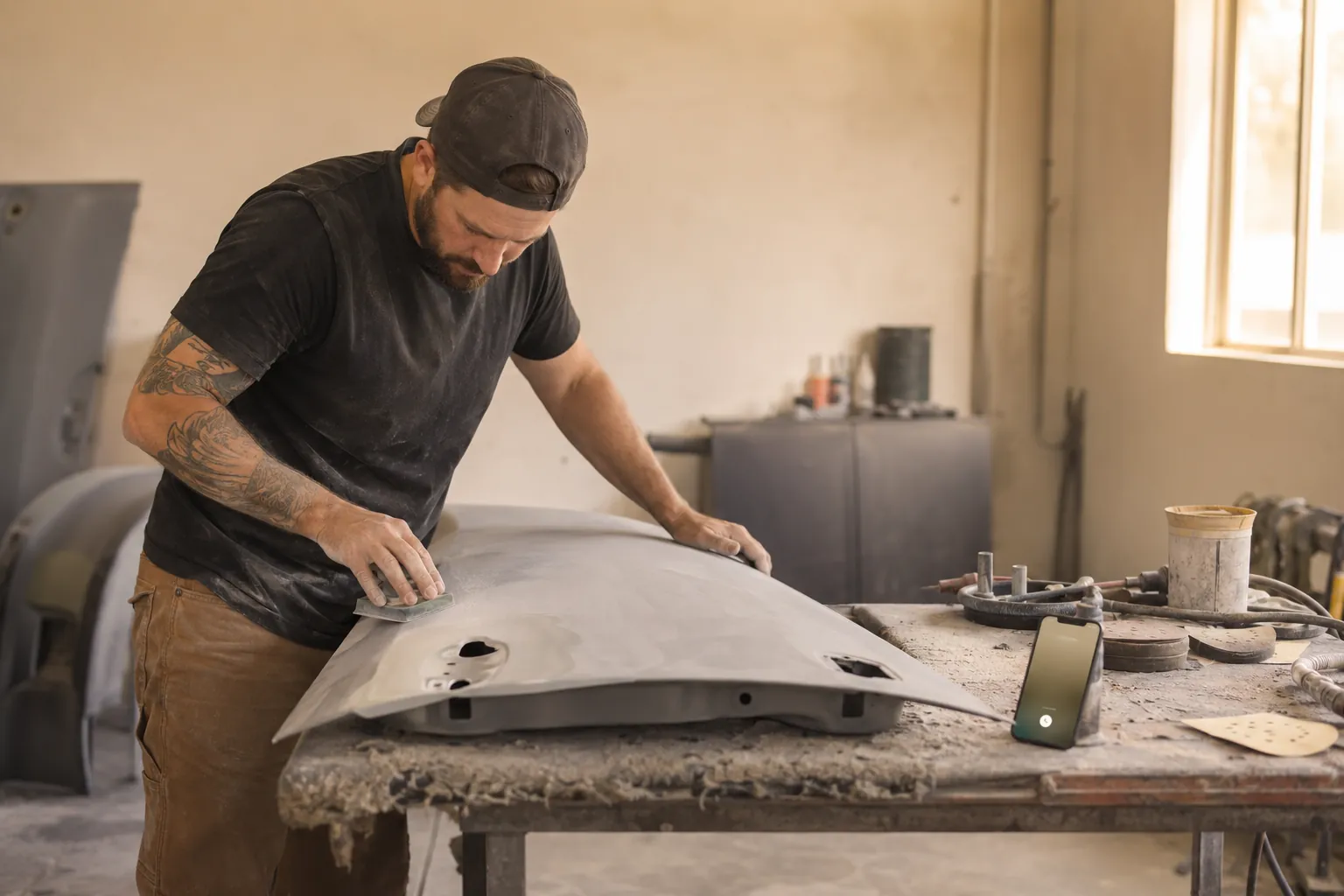
This is the squeeze every owner-operator knows. You are the painter, the estimator, and the front desk. When you are in the booth, you cannot be on the phone. Something drops, and it is usually the inbound text.
Some shops bridge it with a plain answering service. Truman Fancher, who runs his own collision shop in Pelham, Alabama, leans on one. “My answering service takes care of the caller until I can devote my full attention to them,” he says. That holds the caller, but a plain service still leaves the “how much” question and the booking for you. The driver waits on you for the part that closes the job.
We dig into that exact moment in in the booth, can't answer. A respirator and a spray gun do not pause for a price question. So the price question waits, and the driver does not.
How SvarKlar answers the two questions for you
SvarKlar is built to catch that inbound while your hands are full. It replies to texts, web-form leads, and direct messages in seconds, day or night. If a driver calls and you cannot answer, it texts that caller right back. So the “what is it and how much” message gets a real reply in seconds, not in two hours.
It answers honestly, the way you would. For “how much,” it gives your standard answer or a rough range and explains that a real number needs eyes on the car. For “what is it,” it handles the repeat questions about insurance, estimates, timing, and loaners with the answers you set. Then it does the part that actually wins the job. It asks if the car is drivable, the make and model, whether insurance is involved, and it books the estimate.
Anything urgent or unclear does not get a guess. It goes straight to you with the full context, so you pick up a clean handoff instead of a cold voicemail. If you want the long version of how that capture-and-book flow runs, it is in how SvarKlar works, and the role itself is laid out in the AI receptionist guide.
Speed is the part that decides it
Two shops can give the same range. The one that sends it in seconds gets the car. We put real targets on it in how fast to reply to leads, and the short version holds here. Minutes beat hours, and seconds beat minutes.
This matters more for collision than for almost any trade. The driver is upset, the damage is fresh, and he is texting three shops from the side of the road. The first useful reply does most of the selling before you ever see the car.
If you are buying leads on top of all this, slow replies waste that spend too. We cover that trap in paid leads versus your own. A lead you paid for and answered an hour late is money you set on fire.
You will never quote a wreck perfectly from a text, and no driver expects you to. What he expects is a fast, honest answer and a time to bring the car in. Be the shop that sends that in seconds and you stop losing jobs to whoever simply replied first.
Want to see how it would handle your “what is it and how much” texts? Book a call or see how the service works.
More guides for collision shops are in the auto body resource hub, and the full library is in SvarKlar Resources.