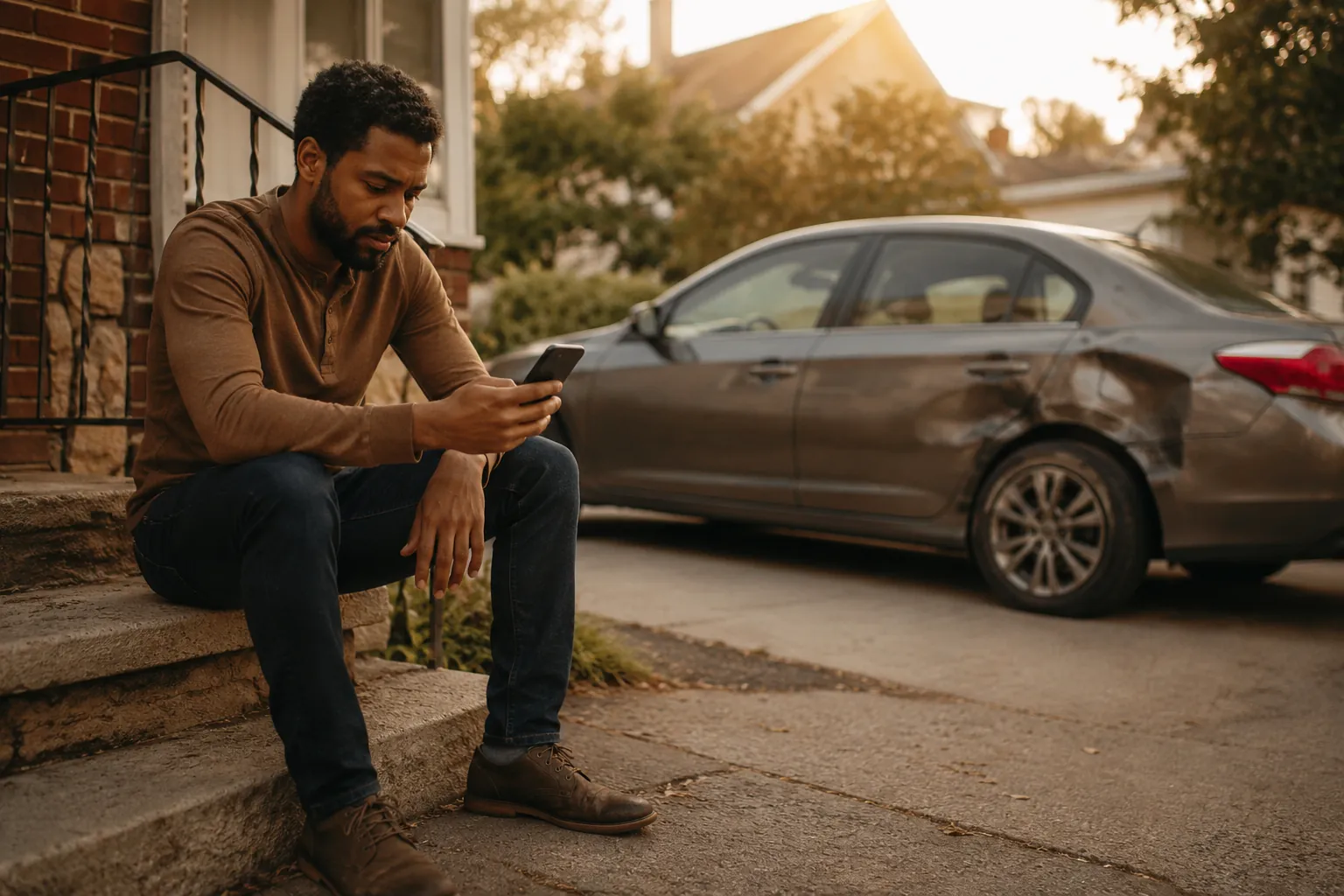
You took the message. You meant to call back. Then a car went up on the lift, a supplier walked in, and the day ate the note. By the time you remembered, the job was gone.
A customer put it plainly in a complaint against a body shop in Columbus, Ohio. “I’ve been calling them, emailing them. I’ve been text messaging them, calling them, them [sic], and they haven’t returned my call.” Every channel tried. Still nothing back.
That is the same shop a different customer described like this: “No phone call on Monday. On Tue morning I called the shop and asked if they ordered my fog lamp and when it would be replaced. We will call in an hour and let you know. Today is Wednesday and I am still waiting to receive the call I was supposed to receive Monday!”
Read those as the shop owner, not the customer. Each one started as a lead you wanted. A car to fix. Money on the table. By the time the callback should have happened, the trust was already gone.
The callback that never comes is a pattern, not a one-off
It is easy to read one angry review and think it was a bad day. It was not. The same story shows up shop after shop.
A complaint against a body shop in Cleveland: “every time I call I get a voicemail or his employees say they dont know and he isnt there.” A review of a shop in Austin: the owner “would not answer his phone ignoring me.” Even the big chains miss it. A customer filed against a Caliber Collision location that he got “no follow-up,” an employee “said he would call me back. He did not,” and a manager “would call me. He has not.”
These are real complaints, filed by real customers. Different shops, different states, same wound. The job did not die because the work was bad. It died in the gap between the message and the call back.
Why good shops drop the callback
You are not lazy. You are busy doing the actual work. That is the whole problem.
One collision owner on the BodyShop Leaders Podcast is described as a one-man shop where he is the technician, the painter, and the front desk all at once. Another guest lives the “wearing multiple hats” reality of running a shop. When you are under a car or matching paint in the booth, the phone is the thing that drops. You will call back. You mean it. Then a supplier shows up, an estimate runs long, and the day is gone.
Here is the part that hurts. The job often hinges on how that first touch gets handled, and most shops handle it weakly. The BodyShop Leaders Podcast quotes Jim Lovejoy, a refinish consultant with 25+ years across collision shops, on what he hears estimators say: “Let us know if we can help you.” The show calls that out plainly. It is “not a closing attempt. It’s not even close.”
The owners who get this say it bluntly. On Reddit, one operator’s first piece of advice to a new shop owner was to answer the phone, every time. His words: “Make sure the phone gets answered every time it rings with a friendly voice, even if it’s a PITA caller.” Easy to say. Hard to do when both your hands are on a car.
An owner of an auto repair shop, an adjacent trade, said the same thing about the call itself. Chris Shamis of Dakota Ridge Auto: when a caller does not get a confident answer, “they might say, ‘OK, I’ll call you back,’” and “next thing you know, you’ve lost that opportunity with that customer.” His shop fixes cars, not collision, but the phone pain is identical.
Customers do not wait for you
The reason a missed callback costs so much is simple. People do not sit by the phone hoping you ring back. They move on.
Most people whose call goes unanswered do not try again. They ring the next shop on the list right away. You have felt it from the other side. The lead you never called back is the lead someone else booked.
Flip it around and the same fact works for you. One auto-shop owner on Reddit, a repair shop rather than a body shop, said the callback alone wins work. He calls back on missed calls, and added, “Gotten quite a few jobs by being the only person that actually called back!” The phone pain is the same across the auto trade. The shop that answers is the one that books the car.
What makes collision worse than most trades is the size of the ticket. A bumper job, a full repaint, a real collision estimate. None of those is a quick oil change. So a dropped callback is not pocket change. It is often a four-figure repair order walking out the door.
And the caller who could not reach you is usually phoning around. They want two things fast: what it is, and what it costs. Whoever answers that first gets the car. We lay out the exact questions a collision customer asks before they pick a shop in the price questions they ask before the next shop.
The fix is speed, not memory
You cannot out-discipline a busy day. The shops that win the callback have a system that answers before anyone has to remember. The reply goes out while you still have your hands full.
The BodyShop Leaders Podcast makes the case plainly. Follow-up alone wins jobs, and most shops do not follow up at all. The ones that reply fast and chase the lead are pulling work the others never even know they lost. Speed is the whole game, and we go deeper on it in how fast to reply to leads.
This is what SvarKlar does. It is a receptionist for your inbound, built to catch and book the lead. When a text, a web-form, or a message comes in, it answers in seconds, day or night. It asks what you need to know. The damage, the make and model, the timing. Then it books the job or sets a clear time you will reach out.
The missed call gets a text back in seconds
Now for the part that breaks the pattern above.
Here is what SvarKlar does about the callback that never came. The moment a call hits your voicemail, it texts that caller back in seconds. The customer who would have sat there waiting for Monday’s call gets a real reply while the wreck is still fresh in their mind. No note to call back later. No name on a list that gets buried by lunch.
A text in seconds beats a callback that never comes, every time. The lead stays warm instead of going cold while you finish the car in front of you.
Callback templates you can steal
If you are handling the phone yourself, keep a few short replies ready and a simple rule for when to send each. Make them yours, then reuse them.
- Missed call, send within minutes: “Hi, this is [Shop]. Sorry we missed your call. We handle collision and body work. Text a couple photos of the damage plus your year, make, and model, and I’ll get you a rough range and a time to bring it in.”
- Promised repair update, send when you said you would even if nothing changed: “Quick update on your [vehicle]: parts are ordered and it is still on track for [day]. I’ll message you the moment that changes. Any questions in the meantime?”
- Estimate follow-up, send a day after the estimate: “Hi [Name], following up on your estimate for the [vehicle]. Happy to answer anything or get you on the schedule. Want me to hold a slot this week?”
The rule behind all three is the same. Send it when you said you would, not when the day finally frees up. That is exactly the part SvarKlar keeps for you so the thread never goes quiet.
“I don’t want a robot turning off my customers”
Fair worry. Your customers just had a wreck. They are stressed, and they want a clear answer from a real shop, not a bot that mangles the details.
So SvarKlar stays in its lane. It captures the lead, answers the common questions, and books what it can. The second a lead is urgent or unclear, it hands the whole thing to you with the full story attached, not a shrug. You stay the one who talks to the customer about their car. The software just makes sure nobody falls into the gap first. There is more on how that handoff works in the cost of missed calls and on the wider role in our AI receptionist guide.
Where this hits hardest in a body shop
Think about the leads you lose without ever seeing them. The text that came in while you were spraying. The web-form at 9 PM after a fender-bender. The caller who hit voicemail because both hands were on a panel.
Those are not small jobs. They are the four-figure repair orders a real collision ticket runs to. We put a real number on one of them in what a collision lead is worth. And if your worst gap is the booth itself, the place you physically cannot reach a phone, that is its own story in why you lose leads while you are in the booth.
The whole job starts at that first touch. Catch it, and the rest is just the work you are already good at. Drop it, and you are the shop in the complaint, wondering why a customer who reached out three times took their money down the street.
More on the niche, including the other ways collision leads slip, sits on the auto body resources hub.
The shop that keeps the job is the one where the lead got a real answer in seconds, whether a hand was free to give it or not. That is the gap SvarKlar closes. It answers texts and web leads the moment they land, and it texts back the caller who hit your voicemail. The customer who would have walked stays put. It can do that for your shop too.
Want to see how it would handle your inbound? Book a call or see how the service works.
More guides like this are collected in SvarKlar Resources.