
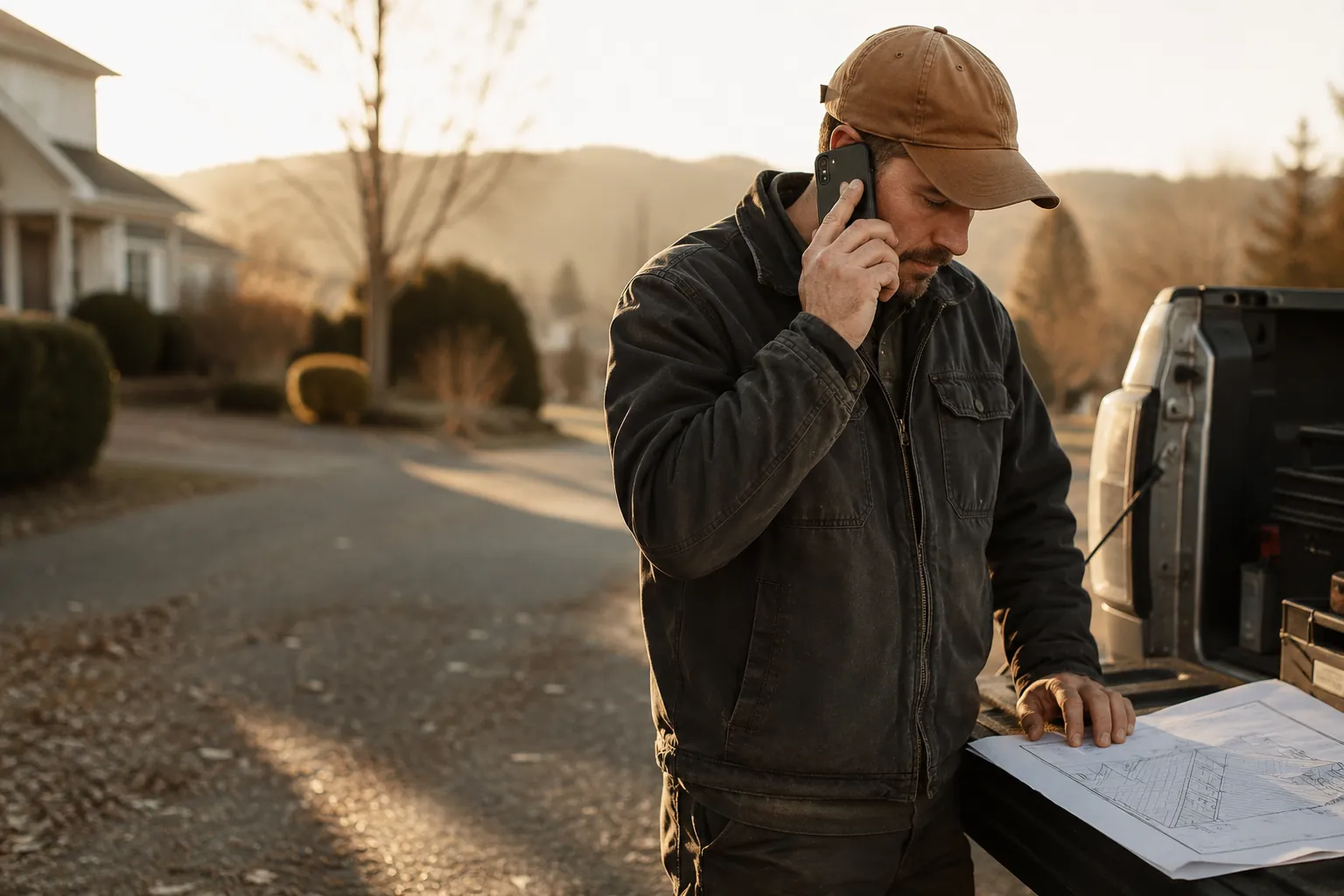
A homeowner calls from the driveway to say there is a soft spot near the chimney and maybe a few shingles gone, and asks what that would run. It is a fair question, and the answer on the phone leaves too much unknown for a firm price.
A soft spot near a chimney could be three shingles and a bad flashing seal. It could also be rotten decking under a leak that has been running for a year. Same phone description, completely different job, completely different price. Quote the small number and you eat the loss when the plywood turns out soft. Quote the big number to cover yourself and the caller may book the crew who sounded cheaper.
Why the estimate has to happen in person
Bar Zakheim, CEO of Better Place Design & Build, told Yahoo Local: "One issue, especially with estimates that are done completely online or over the phone, is accuracy," and added: "It's easy for miscommunications or outdated information online to throw off an estimate." In the same source, Brandon Foote of Advanced Roofing & Construction said: "Be wary of roofing contractors that don't provide an adequate inspection [that involves] getting on the roof [and] into the attic."
Foote names the standard: a roof price comes after someone has been on the roof and in the attic. That is a fair reason to hold off on the phone, and nothing to apologize for. A number given without that visit is a guess.
What a caller is actually asking for
A price question may be about budget, urgency or the scope of the inspection. Justin Jones gave a general-contractor example in Contractor Talk: "I need to get more estimates for the bank. Can you help?" Ask what the caller has seen, whether water is entering, and whether they need a written estimate for a lender or insurer.
If your shop has a known range for a defined service, say what that range covers. Otherwise explain which parts of the roof must be checked before giving a number.
How SvarKlar handles the price question
Safety comes before any question: once you set your emergency rules, the reply tells the caller to stay off the roof, to leave a room where water is near a light fixture, outlets or a sagging ceiling, and to call 911 or the utility first for a downed power line or a tree through the house. After that, SvarKlar asks what the caller sees, the roof age if known, and whether water is coming in. It shares only a range your crew has approved for a defined service. Otherwise it collects details for a roofer. Optional booking uses agreed slots; a person confirms dispatch and the final price. See how SvarKlar works for the setup.
If the details do not add up, a mismatched story, an unclear location, storm damage that sounds worse than described, it hands the whole thing to you instead of guessing. You keep the final call on price. SvarKlar's job is making sure the conversation that leads to your visit happens the moment the lead comes in, not three hours later when you finally get a break between jobs.
The visit still closes the sale
Getting a caller to book the inspection is the win. Once you are standing on the roof with a tape measure, the conversation changes completely, from a guess over the phone to a real number backed by what you actually found. That shift is worth protecting, and it starts with a fast, honest first reply instead of a stalled voicemail. If a hailstorm just sent a pile of these calls at once, see how to sort the real emergencies from the rest before you start quoting any of them. For the wider picture on catching that first reply, see the roofing resource hub.
Ask about visible damage, active water and timing. Your roofer can then decide whether an inspection or a known service range is the right next step.
Want to see how it would handle your quote calls? Book a call and we will walk through where jobs slip away before you ever see them.
More guides like this are collected in the roofing resource hub.