
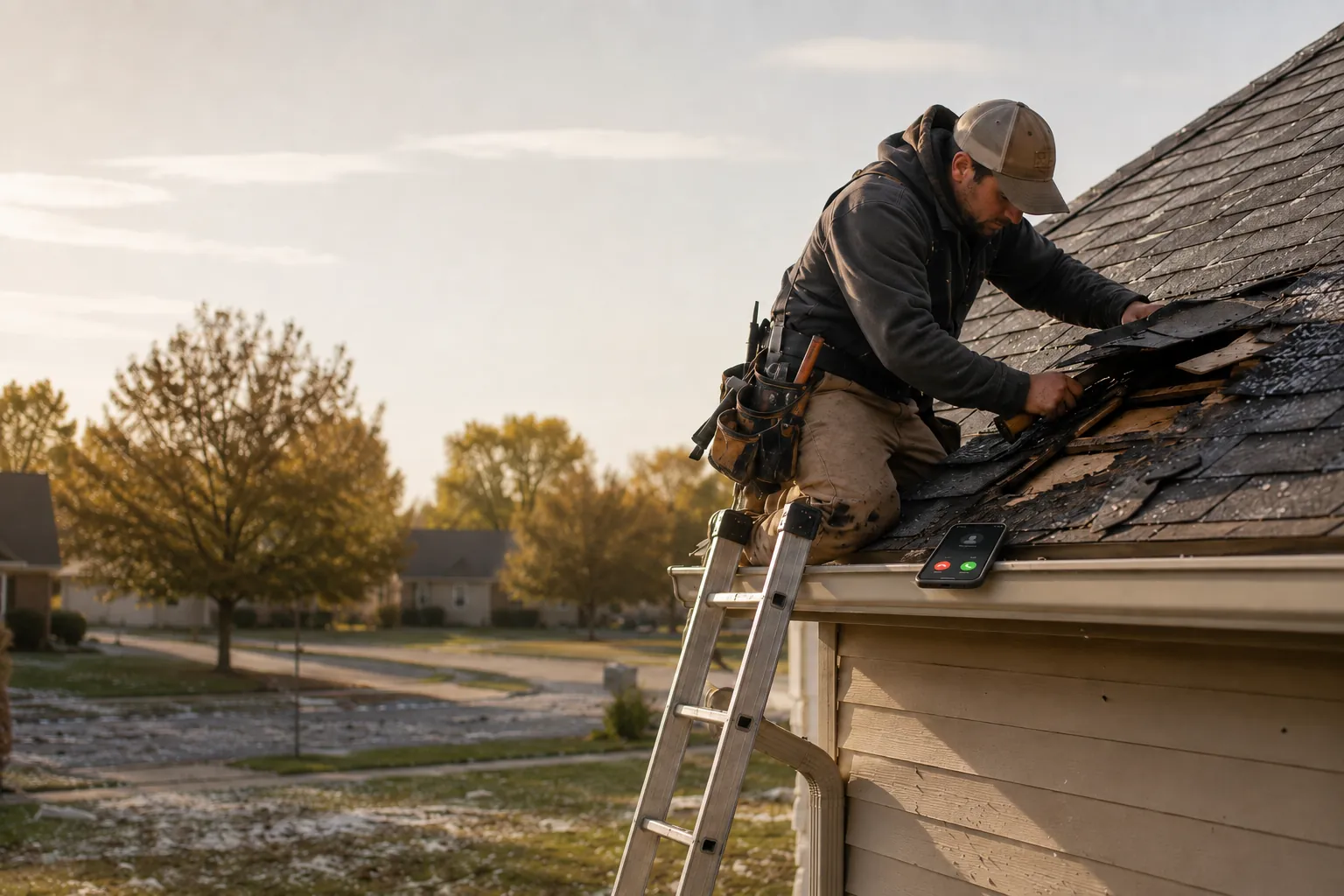
Two messages sit at the top of the pile after a hail cell clears. One owner saw a drip over the kitchen after a gust, on a roof that went on a few years back. The other found shingle granules in the gutter and dents on the vents, on a roof the owner calls old. The first may end as a patch. The second may end as a replacement if the roofer finds bruising across the slopes, and neither is certain until someone is up there.
Safety comes before any intake question. Callers should stay off the roof. If water is coming through a light fixture, near outlets or through a sagging ceiling, they should leave that room and turn the power off only if it is safe to do so. For a downed power line or a tree through the house, the first call is 911 or the utility, not the shop. Only then does the shop record the reported damage and pass active-water concerns to a roofer promptly.
Sort the pile by what each caller can report
Give each reported problem a status: active water, missing roof section, visible hail with no leak, or request for a general check. Add the address and when the damage appeared. That list lets a roofer review hazards and capacity without treating every name in the call log as the same job.
The useful split is the caller's reported hazard, not the apparent size of a possible sale.
What actually separates an emergency from a look-later job
Ask whether water is entering, whether a section is missing, and when the hail hit. A roof can have hidden hail damage without a visible leak. Flag active water for prompt human review, and let a roofer decide when the no-leak roofs need inspection.
Skipping that sort is expensive both ways. Chase every call at the same speed and you spend Tuesday driving to a cosmetic hail check while a real leak, three streets over, gets worse by the hour. Slow-walk everything instead and the active leak sits next to dozens of other unanswered messages until someone else's crew gets there first.
How SvarKlar sorts the surge
In the agreed setup, SvarKlar collects reports through your chosen channels: what happened, whether water is coming in, the address and a callback number. Roof age can be recorded for the roofer, who judges the damage on the roof itself. Your escalation rules route reported urgent damage to a person. Inspection bookings use agreed slots and crew capacity, and a reply only tells the caller the report arrived.
None of that replaces your judgment on the ground. You decide which truck goes where after reviewing the caller's report and the roof itself. SvarKlar gathers the reported details; it cannot tell what each roof needs from a message.
After the surge passes
After the rush, review what came in, what your crew could take, and what was handed off. Use that to set a realistic plan for the next storm. For night coverage, see catching the storm-night call. For the wider first-reply plan, see how fast to reply to leads.
Before storm season, agree which questions to ask and who reviews reports of active water or missing roof sections. The roofer decides inspection urgency and dispatch after reviewing the facts.
Want to see how it would sort your crew’s next storm surge? Book a call or see how the service works.
More guides like this are collected in the roofing resource hub.