
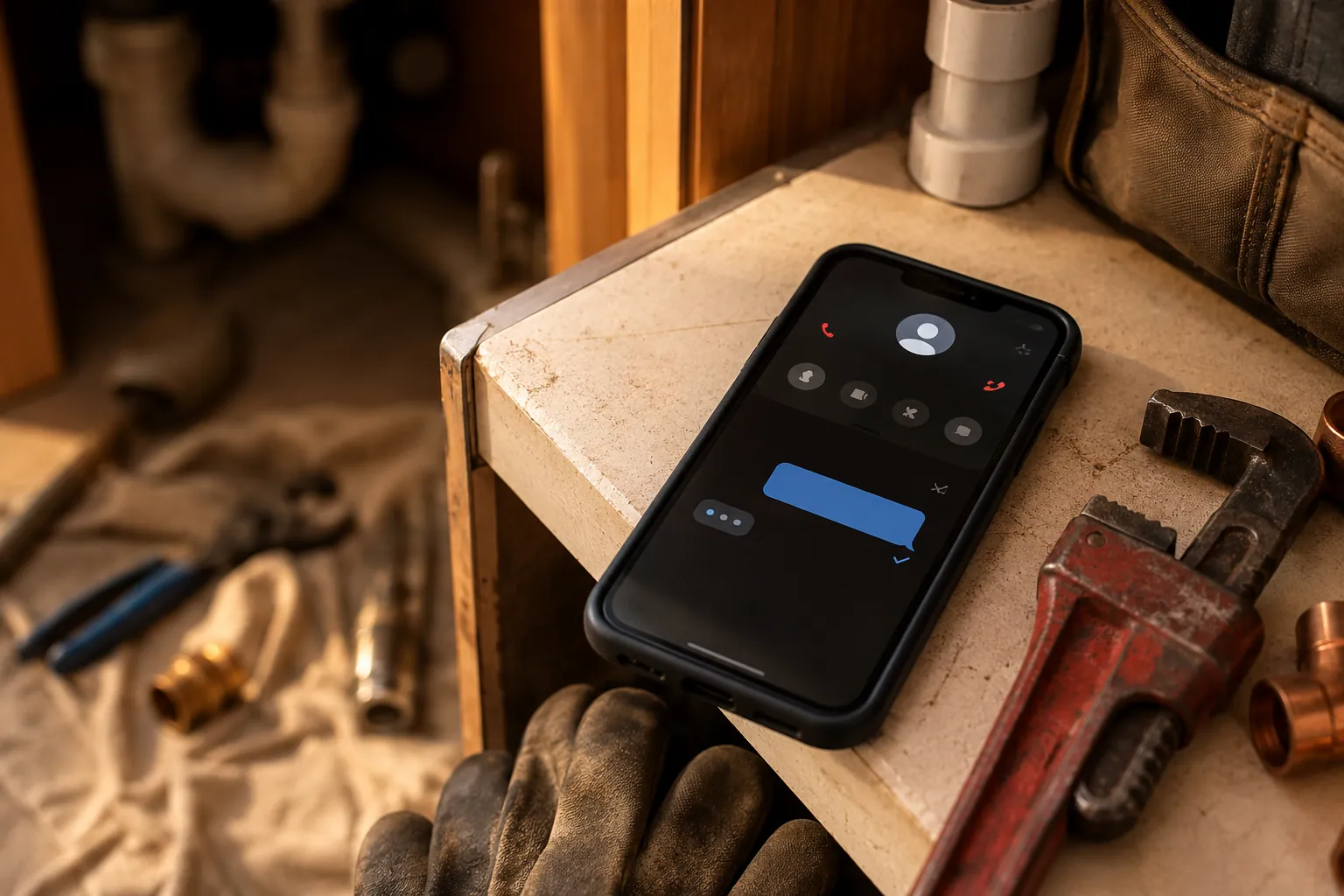
A pipe lets go under a kitchen sink. Water is spreading across the floor. The homeowner grabs their phone, searches "plumber near me," and calls the first number. It rings four times and drops to voicemail. They do not wait for the beep. They are already pressing call on the next plumber.
That is the whole problem in one moment. The caller never hated your business. They never even spoke to you. They just had a flood and you could not pick up, so they kept going down the list.
Who actually leaves a voicemail
Your loyal customers do. The ones who have used you for years and have your cell saved will leave a message and trust you to call back. They know you. They will wait.
A first-time caller may try another plumber. Two owners on the Plumbing Zone forum describe losing calls to voicemail, and one says some callers leave no message. Those are their shop experiences, not a measured rate for every plumber.
That last line is the part owners feel in their gut. The phone rang. A real job was on the other end. And there is no message, no number, no way to call them back. The lead did not get delayed. It vanished.
Why a callback promise does not save it
A clear greeting can help, but it cannot collect details from someone who hangs up.
One owner, posting about after-hours work on the Plumbing Zone forum, said it best. "Customers are impatient and busy. They want their answers now, not 15 minutes from now. If they can't get it, they will go somewhere else." He went further on why the promise is dead: "Too many companies promise to call back so the customer doesn't believe it anymore. They will call another company."
A caller may leave a message and still contact other plumbers. A fast reply gives them a clear next step while they are choosing. See our reply-speed guide for the evidence and its limits.
What a missed call really costs
Put a dollar figure on it. A single lost call is not pocket change, it is a real job gone. A few of those a week and you are out real money you never see on a report.
The pain shows up in public too. A homeowner who calls again and again, only to hit voicemail every time or a mailbox that is full, does not just move on quietly. They leave a one-star review that says they wanted to hire you and could not even reach you. You lose the job and take the reputation hit on top of it. We add up the longer bill in the cost of missed calls.
Voicemail is worst at the worst hours
The calls you most want to catch come in when no one is near the phone. Nights and weekends. A water line bursts and the homeowner cannot find the shutoff. Raw sewage backs up into a tub. Ask anyone in that spot whether they would wait and hope for a callback while the water keeps rising.
The answer is no. Nobody standing in rising water waits for a callback. They call until a person answers. Those after-hours jobs are often the best-paying work you get, and voicemail hands every one of them to whoever picks up first. There is more on that in handling after-hours plumbing calls. For sorting a burst pipe from a drip, see plumbing emergency triage, and for busy freezing weather, planning for a plumbing cold-snap surge.
So what goes in voicemail's place
Give the caller a useful next step by text.
A missed-call text can ask for the address, problem, and urgency while the caller is still looking for help. It must not promise a visit before a person checks the schedule. For example: “Sorry we missed your call. Safety first: if you can reach the main water valve safely, shut it. If water is near outlets or an electrical panel, stay clear and call the power company. If you smell gas, leave and call the gas company or 911 from outside. Then reply with what is leaking and the service address. Our team will review your request; no visit is booked yet.” That gives the caller a way to answer without pretending a crew is on its way. See Ready.gov's electrical warning and Con Edison's gas steps.
A spouse or a generic answering service does not close this gap. They can pick up, but they cannot run the job. A spouse who answers hits the limit fast, she cannot quote jobs. A service that just takes a name is not much better than the machine. The caller can tell, and they leave.
How SvarKlar handles it
SvarKlar is built to catch the lead behind the call you could not take. Miss a call, and it texts that caller right back in seconds, day or night. It also answers your texts, web-form leads, and direct messages the moment they land. It answers calls with AI too, and it replies fast.
From there it does the real work. It asks the questions your trade needs, the location, the problem, how urgent it is. It books the job onto your calendar or sets a clear callback time. If a job is an emergency or the caller says something it cannot sort out, it hands the whole thing to you with the full context, not a shrug. A burst pipe at midnight gets flagged to you, fast, with the details already collected. You can read the wider picture in what an AI receptionist does and the step-by-step in how SvarKlar works.
One more honest note. SvarKlar will not give a hard price on a job it has not seen, and that is on purpose. Most owners do not quote a full job over the phone for good reason. The text gets the facts and books the visit, where you can price it right. That whole tension lives in whether to quote a plumbing job over the phone.
This is not big software you fight for six months. Frederik builds it for your shop and runs it himself. One person on the hook for it, not a platform that signs you up and then goes quiet the day you have a problem.
Voicemail only works on the customers who already love you. For everyone else it is a hang-up and a call to the next plumber. The fix is to put a fast text in its place, so the stranger with a flooded kitchen hears back from you before anyone else.
Curious how many of those missed calls it would catch? Book a call, or check out how the service works.