
Book a call

Stop losing HVAC leads to missed calls and slow replies

A home with no heat or no cool does not wait. The owner calls the next HVAC shop. Here is how to be the one who answers first, even when you are on a roof or under a unit.

Book a call
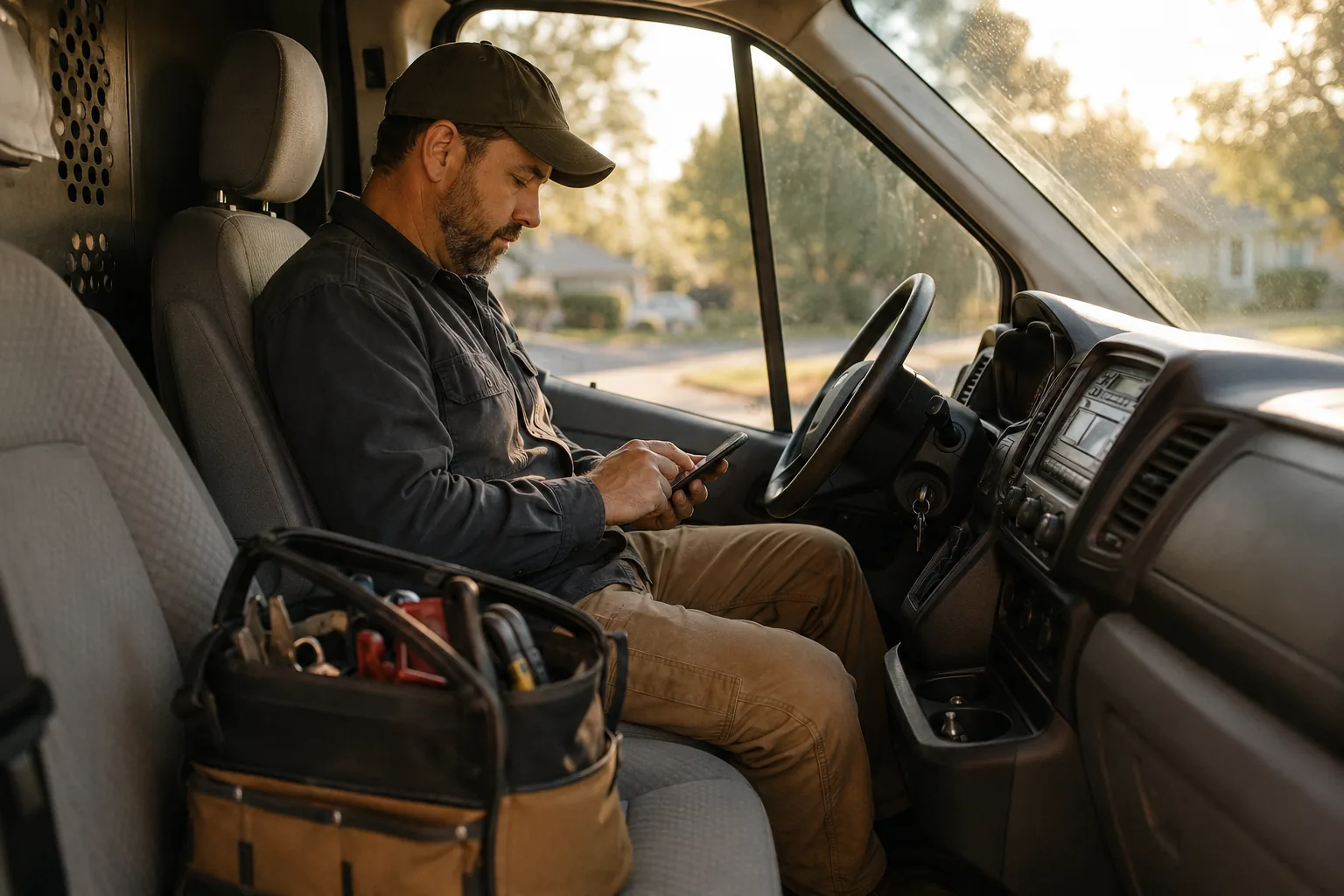
An HVAC service van arriving at a home at sunrise

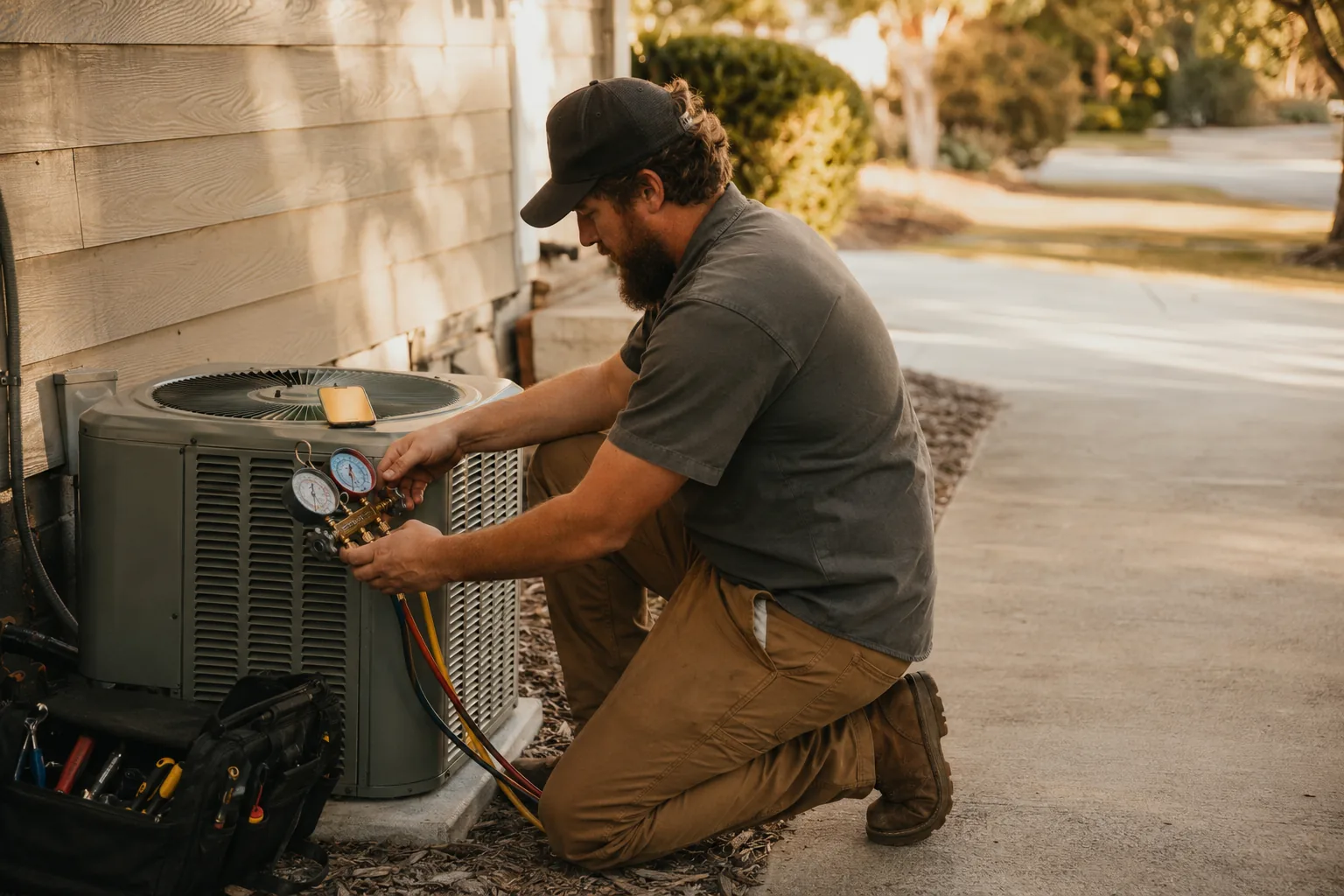
You are on a roof in July. The unit in front of you is half apart and your hands are full. Your phone rings. You cannot stop, so it goes to voicemail. By the time you climb down and call back, the homeowner already booked someone else.

That is the quiet way a small HVAC shop bleeds money. Not on price. Not on workmanship. On a call nobody could pick up. A home with no cool in a heat wave, or no heat in a cold snap, is an emergency to the person inside it. They are not patient. They start dialing.

Below is why this keeps happening, what one missed lead really costs you, and the fix that does not need a second person on the payroll. Each part links to a deeper guide if you want it.

The homeowner is already calling the next shop

Speed is the whole game in this trade. A mystery shopper named Colette Kemp called 15 HVAC companies one weekend to see who would actually answer. The result is brutal to read as an owner. "Two business owners answered their own phones," she wrote. "The remaining 11 companies? Voicemail. Or worse, endless ringing with no answer at all."

Eleven of fifteen shops missed a ready buyer. Every one of those was a job somebody could have had. The bar to beat is low. Just replying fast puts you ahead of most of the trade.

One answering-service vendor frames the same pattern with rough numbers. It says the typical HVAC contractor misses "nearly one-quarter" of incoming calls, and that the "vast majority" of people who hit voicemail just hang up and dial the next contractor. It also says waiting "more than 30 minutes" pushes most callers to a competitor. Treat those as directional, not gospel. But the shape is right. Minutes beat hours. Seconds beat minutes. We dig into the real targets in HVAC lead response time.

Even the owner who answers can lose the lead

Picking up is only half of it. In that same mystery-shop test, Kemp reached a few owners who were clearly in the middle of something. One "was clearly at a store. The line quality was terrible." Another "had children playing loudly in the background." That second owner, she wrote, "admitted he couldn't really do anything or write anything down."

So even when you grab the phone from the van, you cannot take the lead. No calendar in front of you. No way to note the address or the unit. The customer hears the chaos and quietly decides to call someone who sounds like a real operation. There is a deeper look at how these leads slip away in why HVAC leads go cold.

The after-hours job is the one you really lose

Here is where it stings most. The calls that come in at night, on weekends, and on holidays are often the best-paying work you get. The same vendor estimates that "the majority" of customer calls to HVAC companies land after 5 PM, on weekends, or during holidays, and that the average emergency job brings in "2-3 times the revenue of a standard scheduled service call."

Those are exactly the calls you cannot pick up. You are asleep, or at dinner, or with your family. You cannot pay a person to sit by the phone all night. The math never works for a small shop.

So the homeowner with a dead furnace at 11 PM hits voicemail, hangs up, and calls the next name. The premium emergency job is gone before you wake up. The fix is to send a real reply while you sleep. We give you words for it in this HVAC night reply template, and a way to clean up the next morning in this HVAC morning follow-up checklist.

Summer and freeze peaks make it worse

The leak is not steady. It spikes exactly when the money is best. A small shop owner on Reddit said it plainly: "I own and operate a small HVAC company (three employees) and handling the number of calls we receive, especially during the summer, is becoming quite unmanageable."

That is the trap. Peak season is when the phone never stops and when each job is worth the most. It is also when you are most buried doing the actual work, so the most calls slip through at the worst possible time.

And this happens even to shops that are run well. One owner posted that "we receive more than 50 calls a day and miss 2 or 3 of them." Two or three a day, every day, through a busy season, adds up to real work walking out the door.

What a missed lead actually costs

Put a real number on it. These are typical price bands from named HVAC companies' own pages, not SvarKlar figures.

  • A standard service call runs about $75 to $125 an hour, with a diagnostic fee around $75 to $150.
  • After-hours or emergency service runs higher, about $100 to $200 an hour.
  • A full emergency repair commonly lands between $300 and $1,500 or more.
  • Single parts add up fast: a furnace ignitor $300 to $600, an AC capacitor $250 to $450, a blower motor $600 to $1,200, a refrigerant leak $800 to $1,800 or more.

So one missed call is not a small thing. It can be a four-figure repair you never get to bid. And the customer behind it is worth far more than one job. One vendor pegs the lifetime value of an HVAC customer at "$12,000-$15,000," counting the repairs, the tune-ups, and the system swap down the road. That is what walks the moment your voicemail picks up.

An owner on Reddit ran the math on his own losses, and it lands close to home. "If you're truly losing $500 to $1k a week in profit," he wrote, weighing an after-hours service, "the $300 a month is still a profitable expense." When the work you miss is worth that much, the cost of catching it is small.

Why paid leads do not fix this

Plenty of owners try to buy their way out by paying a lead platform. It tends to make things worse. The trade has been loud about this for years.

One contractor's complaint sums up the quality problem: "of 13 leads only 2 were viable. The rest were people who either didn't answer their phones." Another contractor tallied "Over $10,000.00 in fake leads" where the "phone numbers don't reach actual people or sometimes even ring it all." The Federal Trade Commission ordered one major platform to pay up to $7.2 million over how it marketed its leads.

The lesson is not that marketing is bad. It is that owning your own inbound beats renting someone else's junk. The leads you already paid to attract, your truck, your reviews, your name out there, are the ones worth catching first.

"But I don't quote prices over the phone"

Fair. You cannot price a system swap blind, and you should not. But "I'll have to come look at it" is not the same as silence. The homeowner asking "how much for a service call" mostly wants to know you are real, reachable, and not going to gouge them.

You can answer that fast without committing to a number. Give a typical range, ask the questions that size the job, and lock in a visit. That alone beats the shop that never replied. The questions you ask up front are what turn a cold text into a booked job, and we lay them out in this guide to an HVAC intake form for leads.

"Won't it sound like a bot and cost me the job?"

This is the fair worry, and you should have it. A cheap bot that guesses a price or mangles a no-heat call can do more harm than a missed call. That is a real risk, not a sales line.

But the fear may be bigger than the reality. An HVAC owner who has run AI to handle calls for eight months said the voice quality "is really good, customers genuinely can't tell most of the time." He added that it "still catches me off guard when I hear customer recordings and realize they had no idea they weren't talking to a person." The setup matters more than the software. Done right, it replies in your voice, asks the questions your trade needs, and knows when to stop guessing and hand off to you.

How SvarKlar catches the lead instead

So here is the honest part, plainly. SvarKlar does not answer your phone. It is not a live voice line and it never pretends to be one.

What it does is catch the lead around the call. When a text, a web form, or a direct message comes in, SvarKlar replies in seconds, day or night. When someone calls and you miss it, SvarKlar texts that caller right back before they move on. It asks the questions your trade needs, qualifies the job, and books it or sets a clear callback. Anything urgent or unclear, a no-heat call in January, a gas smell, goes straight to you with the full story, not a shrug.

So the dead-furnace text at midnight gets a real reply while you sleep. The "how much for a service call" message gets a useful answer in seconds. The missed caller gets a text instead of dead air. You wake up to a clean list, not a pile of voicemails.

And it is built by hand. Fred sets up SvarKlar for your shop himself and runs it. No big-software onboarding, no contract you cannot leave, no per-tech bill that punishes you for hiring. It is the underdog version of this, one person on the hook for it, not a faceless platform that signs you up and vanishes. You can see exactly what you get on the homepage, and the broader idea in what an AI receptionist does and how SvarKlar works.

Is this the fix for your shop?

It fits if a few of these ring true:

  • You miss calls because you are on a roof or under a unit doing the actual work.
  • You know good after-hours jobs are slipping to voicemail.
  • Your summer peak buries you and the phone never stops.
  • You are sick of paying for leads that never pick up.
  • You cannot justify a full-time receptionist, but the phone keeps ringing.

One owner who finally added phone coverage said the line every solo operator should hear: "I waited way too long. Now I have two ladies that answer the phone." You do not have to hire two people to stop the leak. You just have to make sure every lead gets a fast reply whether or not you are free to give it.

Tonight a furnace will quit in somebody's house, or an AC will die in a heat wave. They will text the first HVAC shop they find while you sleep. The only question is whether that text gets a real reply or sits in dead air until morning. Catch it, and the premium job is yours before you even wake up.

Want to see how it would handle your inbound? Book a call or see how the service works.

More guides like this are collected in SvarKlar Resources.

Next step

A call is a short, no-pressure walk through your inbound: where leads come in, what you are missing, and whether a fast-reply setup would pay for itself. You leave knowing if it fits, either way. Book a call to talk it through, or see how the service works.