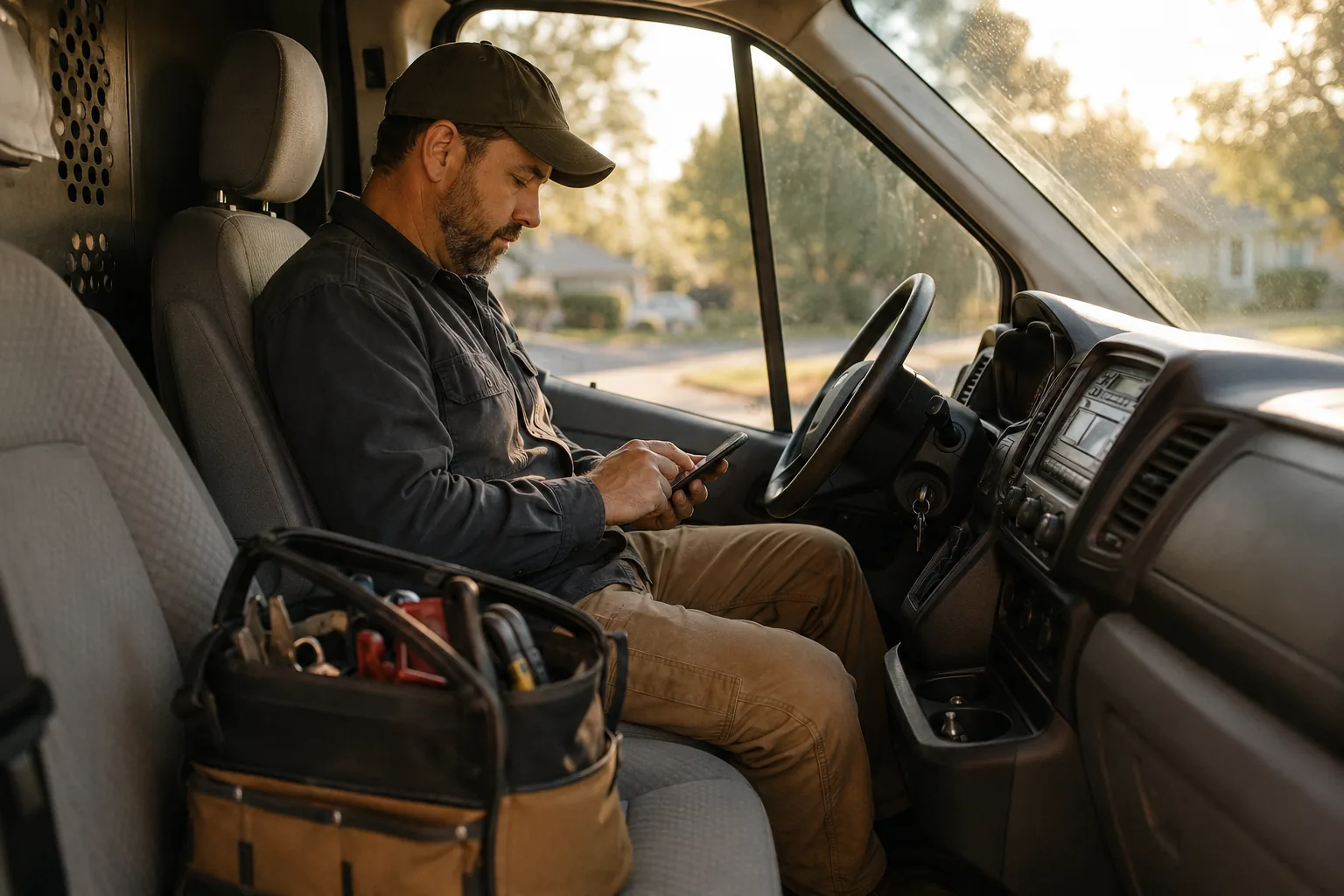
A woman named Colette Kemp called 15 HVAC companies one weekend to see who would pick up. Two business owners answered their own phones. As she put it, the rest were “voicemail. Or worse, endless ringing with no answer at all.” That is the race your website leads run too. The buyer is not waiting on you. They are filling out the next form.
So the real question is not just speed. It is whether the buyer feels seen fast enough to stay with you. A lead fills out your form at 8:30 PM. If they hear nothing until the next day, the risk is not a slower callback. The risk is they are gone before your office opens.
Plenty of speed-to-lead advice pushes one magic number. The spirit is right. Fast matters. But an HVAC lead needs more than a stopwatch. They need a useful first reply, a clear next step, and a clean handoff for the morning.
A widely cited Harvard Business Review study (The Short Life of Online Sales Leads, 2011) found companies that replied within an hour were far more likely to qualify a web lead than those that waited longer. One vendor that studies HVAC call data, AgentZap, frames it the same way: wait more than 30 minutes and the majority of buyers start calling other contractors. When a homeowner has no cool in a heat wave, they will not sit on a quiet inbox.
The practical target for HVAC website leads
For most HVAC companies it comes down to this. In business hours, reply in 5 to 15 minutes. After hours, send a useful written reply the moment the lead lands. If it sounds urgent, make the next human step clear right away. If it is routine, give an honest callback time for the next morning. That is the whole target.
It beats waiting for the office to open and hoping the lead is still warm. The buyer is shopping more than one company at once. And the job on the line is not small. A standard service call runs $75 to $125 an hour at a shop like Refreshed Heating & Cooling. An after-hours emergency repair can land anywhere from $300 to $1,500 or more at a shop like JP Heating & Cooling. Lose that lead to a faster reply and you lose the whole ticket.
Why fast still matters after closing time
The big money often comes in after hours. AgentZap, the same vendor that tracks HVAC calls, says most of them land after 5 PM, on weekends, or on holidays, and that an emergency job can be worth two to three times a normal scheduled call. No heat in January is a safety call. Frozen pipes are a real risk. The owner who replies at 9 PM is usually the one still in the running for that job. The one who waits for 8 AM often is not.
A written reply overnight does not need to solve the whole job. It needs to confirm the message landed, set an honest next step, and grab the few facts the office needs in the morning. If a line in the message smells urgent, like a gas smell or a dead furnace in a cold snap, it gets flagged for a person right away, not parked in a queue.
If your site gets overnight website leads, that first message is part of the customer experience. Silence makes the business feel closed, even when your team would have called first thing.
The right speed depends on the lead type
Not every website lead needs the same handling, but all of them need a fast first step.
Emergency or no-cooling lead
This one needs a fast yes and a clear urgency path. A gas smell, carbon monoxide, no heat in a freeze, an AC out in a heat wave: these route to a person right away. If you cannot send a tech overnight, do not bluff that you can. Confirm you got it, get the key facts, and say when a human will pick it up. The honest reply still keeps the buyer with you.
Urgent repair lead
A unit that quit but is not a safety risk still cools off fast as a lead. Grab the address, the equipment, what is doing wrong, and when they want a call. A common culprit is a worn capacitor ($250 to $450) or a bad ignitor ($300 to $600), fixes a morning tech at a shop like JP Heating & Cooling can quote on sight. Walk in with that context and the call starts ahead instead of from zero.
Routine quote or maintenance lead
A tune-up or a quote on a new system is not a tonight job. But that buyer still wants to know the request reached a real business, not a black hole. A same-evening reply with a clear next step keeps them warm. On a full system replacement, that warmth is worth holding.
What the first reply should actually say
A strong first reply is short and useful. It tells the buyer the message landed, when a person will follow up, and what you still need before that callback. If anything reads urgent, it says so and flags it sooner.
What it must not do is sound like a robot. Owners worry about this for good reason. They say things like “if it sounds like a bot, my customer hangs up” and that older customers “will not talk to a robot, full stop.” So the reply reads like a real person, never promises a tech you are not sending, and never dumps the lead into a dead “thanks, we got your message” with no next step.
That is why better overnight lead handling is not only a speed play. It is a clarity play. The office should open to a clean callback list, not a vague inbox pile.
A simple response-time policy by lead type
If you want one internal rule, set a first-response target for each lead type and hold to it:
- Emergency or no-cooling, office hours. Respond within 5 to 15 minutes and route straight to a person. A gas smell, carbon monoxide, or no heat in a freeze escalates on sight.
- Emergency or no-cooling, overnight. Send a useful written reply the moment it lands. Confirm receipt, grab the key facts, and flag the urgent ones for a person right away.
- Urgent repair. Respond within 15 minutes in office hours, or a written reply overnight. Capture address, equipment, and symptom so the morning call books a same-day slot.
- Routine quote or maintenance. Same-evening reply with a clear next step. No escalation, but never leave it silent until morning.
- Anything unclear. Mark it for faster human review instead of guessing.
This is simple enough to run and strict enough to stop the common leak, which is leaving a good lead untouched until it feels old.
What to avoid
A few shortcuts make the reply worse, not faster. Do not wait until morning just because the office is dark. Do not send a generic auto-reply with no next step. Do not promise live help your team is not giving. And do not start the morning callback with no context, so the tech has to ask everything twice.
Most of all, do not put this off. An owner in one small-business thread said it best after he finally fixed his phone gap: “I waited way too long.” The leak is quiet. You do not see the lead that filled out the form at 10 PM and booked someone else by noon. You just see a slow month.
The best target for an HVAC website lead is the fastest honest reply that keeps it moving. In real life that means a first step in minutes, not a night of silence.
If you want to test that on your own site, book a call or see how the service works.
Part of our HVAC guides, with more across SvarKlar Resources.