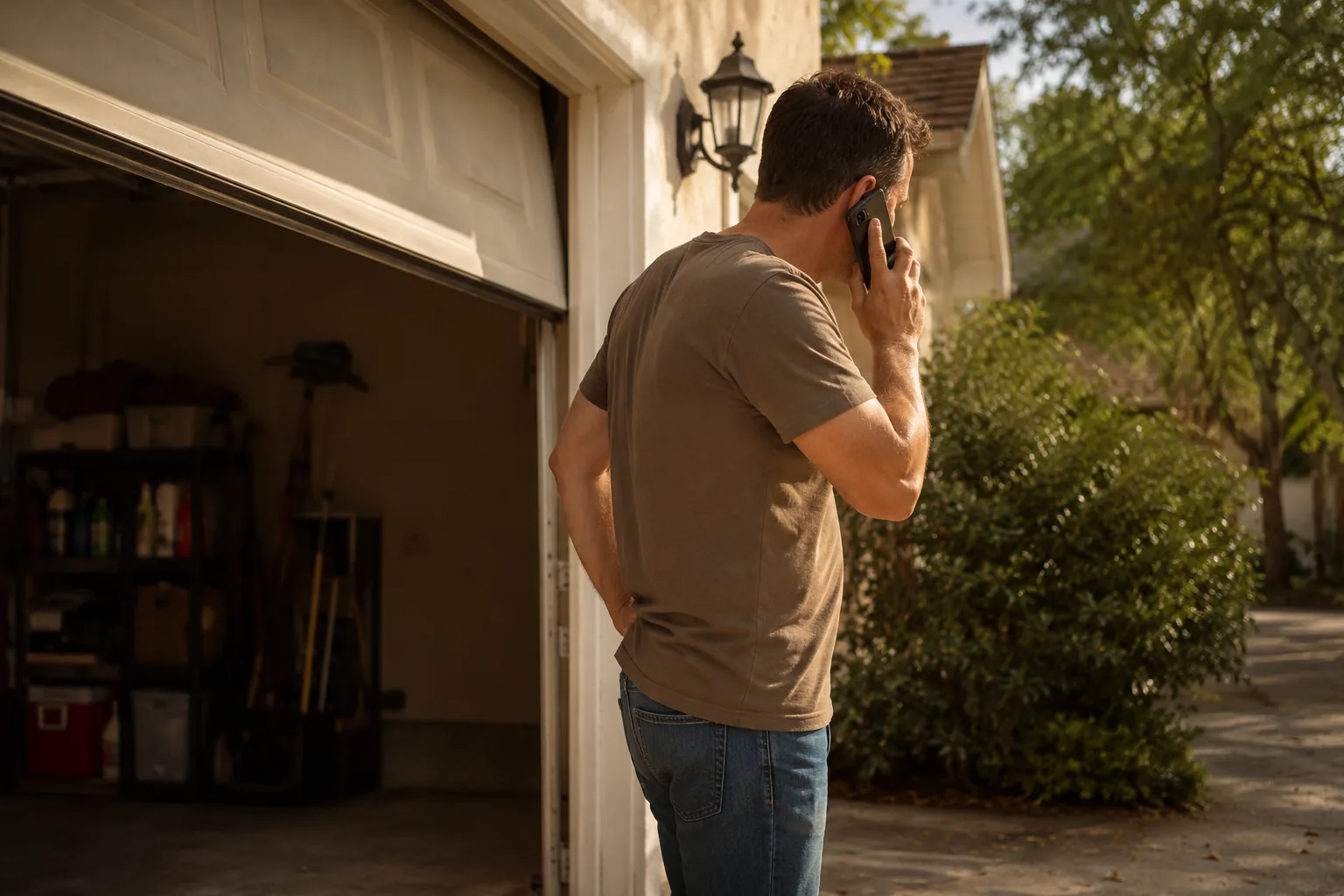
A spring lets go in a garage across town. There is a loud bang. The car is stuck inside, and the homeowner is already late. They grab the phone and call the first garage door shop they find.
It rings. Then a recorded voice asks them to leave a message after the tone.
They do not. They hang up and call the next name on the list.
Why voicemail is the wrong tool for a stuck door
Think about the person on the other end. Their door will not open. Cody Johnson, who runs Garage Door Doctor in Houston, describes that exact moment on his shop's podcast: "if the spring breaks you're not going to get that garage door up." The car is trapped. The day is already going sideways.
That person is not in a leave-a-message mood. A voicemail asks them to slow down, explain the problem to a machine, then sit and hope someone calls back. They will not do it. The next shop is one tap down the list.
So voicemail does the opposite of what you think. You set it up to catch leads. What it really does is hand them to whoever picks up next.
The part nobody wants to hear
How bad is it? Worse than most owners guess.
Ask around the trades and owners tell the same story. Most people who reach voicemail never leave a message. They hang up and dial on. You do not need an exact figure to feel it. Most of your voicemails are leads that already left.
It is not just a garage door problem, either. Owners in every trade say the same thing: the calls that roll to voicemail go to whoever picks up first. The phone you cannot answer becomes the competitor's booked job.
The lead was real, and it walked
Here is what makes a missed garage door call sting. It is rarely a tire-kicker. A door that will not open is a job that needs doing today, and the homeowner has cash ready.
Doug MacDonald, a working contractor who founded Glass Savers, knows this from his own trade. As he put it: "I've lost plenty of jobs." Small ones. Big ones. All of them went "for whoever did answer," in his words. He was on a ladder grinding glass when those calls came in, not garage door work, but the lesson carries straight over. The job you cannot answer is the job your neighbor catches.
And it is not one job, either. The homeowner who books someone else this week calls that shop again next year. They tell the whole cul-de-sac who to use. We put real figures on that in the cost of missed calls. The voicemail you never returned was the start of a customer you never had.
Just being reachable puts you ahead
The good news hides inside the bad news. Your competitors lose these calls too.
Tommy Mello built A1 Garage Door Service into a large chain. In an Authority Magazine interview he says it plain: "I heard somebody say a while ago that if you answer your phones, you are 90% above the rest." Most shops in your area do not answer. Their calls roll to the same kind of voicemail yours do.
So the bar is low. You do not have to be the best tech in the county. You have to be the one who responds while the homeowner still has the phone in their hand. Whoever does that usually gets the work.
The catch is speed. A garage door lead cools in minutes, not hours. We dig into the real targets in how fast you should reply to leads. The short of it: minutes beat hours, and seconds beat minutes.
What SvarKlar does when that call drops
Here is how SvarKlar works. It answers in writing, so every missed caller gets a fast text the moment your phone goes unanswered.
The second a call rolls to voicemail, SvarKlar texts that caller right back. While the homeowner is still standing by the stuck door deciding who to try next, a reply is already on their screen. It also answers the texts, web forms, and direct messages that come in, day and night.
Then it does the real work a sharp front desk would do. It asks what is wrong. Broken spring? Door off the track? Car stuck inside? It finds out the job and how fast they need you. It writes the way your shop would, a plain quick note you might tap out yourself, not a stiff robot script. Routine jobs land on your calendar. Anything urgent or unclear goes straight to you with the full story attached.
So the caller who would have hung up gets a real reply in seconds instead of a beep. The lead stays yours. For the wider picture, start with how an AI receptionist works for service shops, or see the step-by-step in how SvarKlar works.
But my customers hate talking to a robot
Fair worry. You have called a shop after hours and gotten a clunky bot. The odd pause. The fake office sounds. People hang up on that, and they should.
SvarKlar answers by text, in your shop's own words. The customer gets a fast, plain message, the kind you would tap out yourself. No phone menus, no "press one for service," just a quick answer that holds the lead.
It also knows its limits. If a job is urgent or the message is confusing, it does not guess. It hands the lead to you with everything it gathered, so you make the call on the tricky ones.
The after-hours voicemail is the worst one
Springs do not break on a schedule. A door jams the morning of a school run. A spring lets go at nine on a Sunday night.
Those after-hours calls are often your best-paying work, and they are the ones that go straight to voicemail. Nobody is staffed to catch them. You cannot sit by the phone all night, and you cannot hire a person to do it for a one-van shop. That math never works.
SvarKlar is already awake. When the late panic call drops, it texts that caller back and starts the same calm, useful chat it would run at noon. The emergency job that used to vanish by morning is on your list instead. There is more on the night-and-weekend side in handling after-hours garage door calls.
The call you physically cannot take
Sometimes the phone goes unanswered for a reason no voicemail can fix. You are mid-job with both hands full and no safe way to stop.
Winding a torsion spring is the clearest case. The spring is loaded, both hands are on the bars, and letting go is dangerous. The phone may as well be on the moon. We walk through that exact spot in answering calls while you wind a spring. And when the caller wants a number before they will book, that is its own trap, covered in giving a garage door quote over the phone.
Stop letting a beep choose your customers
Right now, a recorded greeting is making business decisions for you. It decides which jobs you lose and which shop your customer hires. It does that every time you cannot pick up, and the homeowner almost never leaves the message that would save the lead.
You can take that choice back. The fix is not checking voicemail faster. It is having something reply the second you cannot, then handing you a warm lead when you are free.
New to the idea? Start with what an AI receptionist is. The full set of garage door guides lives on the garage door resource hub.
The next homeowner with a stuck car will call you first. Whether they stay or move on does not depend on your voicemail greeting. It depends on whether they get a real reply before they dial the next name. SvarKlar sends that reply in seconds, so the lead waits for you instead of walking.
Want to see how it would handle your calls? Book a call and we will walk through where your leads slip away. You can also read what we handle on the homepage.
More guides like this are collected in SvarKlar Resources.