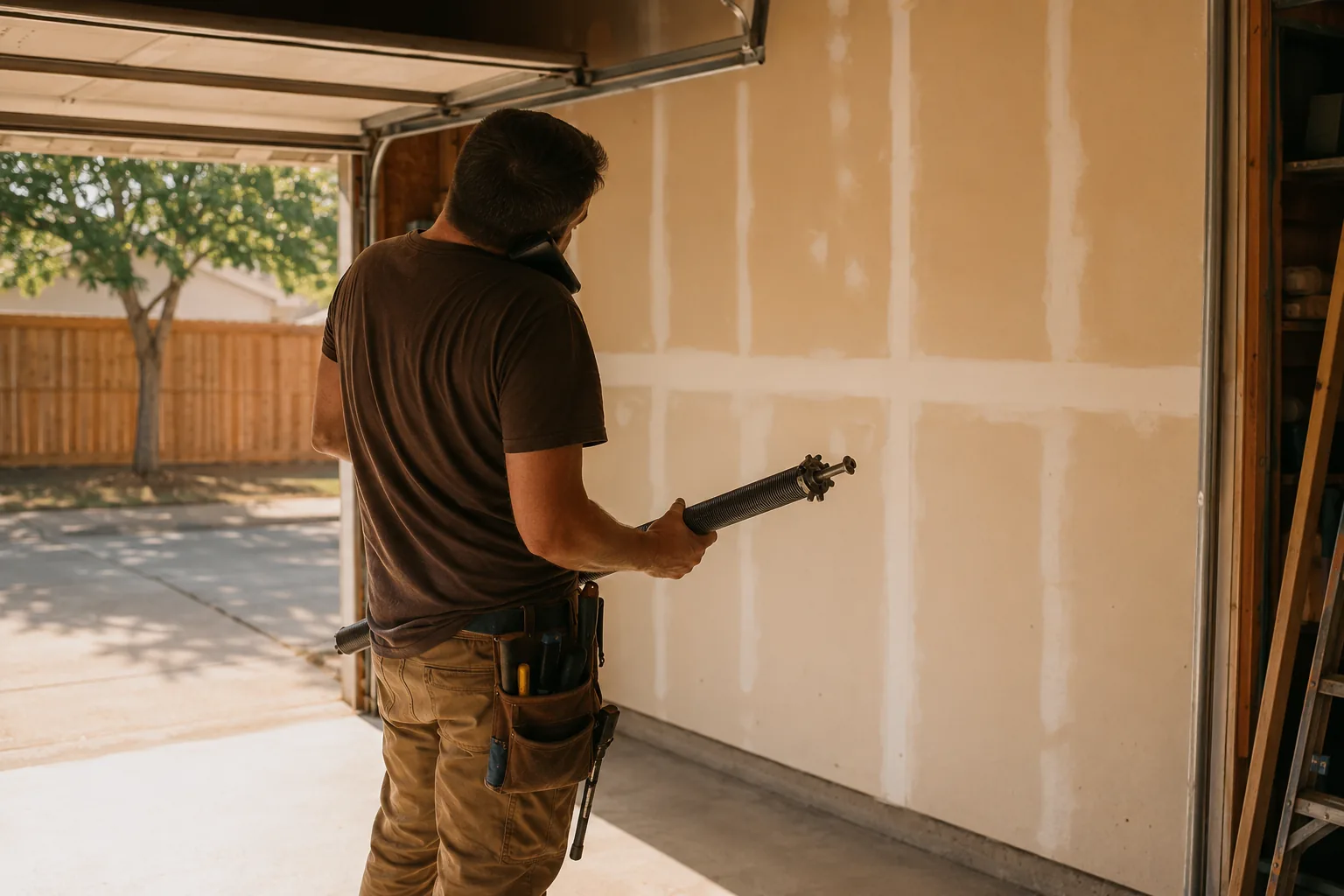
A customer texts you. Their door will not open. The first line is almost always the same.
"How much to fix it?"
You are mid-job and you have not seen their door. You do not know if it is a broken spring, a frayed cable, a track knocked out of line, or an opener that finally quit. Each one is a different fix at a different price. So what do you say?
Why a phone price is a trap
Cody Johnson runs Garage Door Doctor in Houston. On his shop's podcast, he describes the bang that starts these calls: "if you hear a big puff and it shakes your whole house it's probably the spring that broke."
Maybe. Or maybe it is a cable. Or a panel. You cannot tell from a sentence.
Guess high and the caller balks and dials the next shop. Guess low and you have boxed yourself in. Now you are at their house, the real fix costs more, and you either eat the gap or have an awkward talk on their driveway. Neither one wins you a happy customer.
But silence loses the job too
Here is the bind. You should not throw out a hard number, but you also cannot go quiet.
A garage door caller with a stuck car is not patient. "if the spring breaks you're not going to get that garage door up," Johnson says. Their car is trapped inside and they need help now. If your reply is a shrug, or no reply at all, they move on.
Tommy Mello built A1 Garage Door Service into a large chain, and in an Authority Magazine interview he is blunt about how low the bar is: "I heard somebody say a while ago that if you answer your phones, you are 90% above the rest." Most shops never even reply. So the goal is not to dodge the price talk. It is to handle it well and fast.
What to say when they ask how much
You can be honest and still keep the lead warm. Three moves do most of the work.
First, name why you cannot price it blind. People get this. Tell them a door that will not open could be a spring, a cable, or the opener, and each one is a different cost. You are not stalling. You are protecting them from a wrong number.
Second, name a price only where it is true. Some jobs are clean and known. A standard lube and tune with new rollers is one of them, a set job with a set price. If a caller wants that, quote it on the spot. For a repair you have not seen, say what changes the cost, not a figure you would have to walk back.
Third, point at the visit. The price they care about is the one for their door, and that comes from a look. Johnson describes the standard path: "we'll come inspect it we will look at it... we'll go through our 29 point inspection." That is the real answer to "how much." A trained eye on the actual door.
Do those three and the price question starts working for you. The caller hears a real person who knows doors, and the next thing they do is pick a time.
The problem is doing all that mid-job
You know what to say. The trouble is when the text lands.
You are on a ladder, or winding a spring, or driving to the next call. You cannot stop to type a careful reply about springs and cables and inspections. So the text sits. An hour later the caller has booked someone who answered.
Doug MacDonald founded Glass Savers, a glass repair shop, not a garage door company. The trap he describes is the same one: "For years, I watched good jobs slip away because I couldn't answer the phone. I'd be on a ladder, wearing a respirator, grinding glass on a high-rise, and the phone would ring. By the time I could call back, the customer had already hired someone else." The price reply you never got to send costs you the same job as the call you never picked up.
How SvarKlar handles the "how much" text
SvarKlar answers in writing, and that is exactly what the price question needs. It replies to the text or web form in seconds, the way you would if your hands were free.
When a "how much to fix it?" message comes in, it does the careful thing:
- It answers the money question straight. The cost depends on what is wrong, said in your shop's words, not a stiff script.
- It asks what is actually going on. Did they hear a bang? Is the car stuck? Is it the door or the opener? Those facts set the real price.
- It names a set job when one fits. If the right answer is a tune-up, it can quote the clear one. For a repair nobody has seen, it points to a visit, not a guess.
- It books the inspection. The look goes on your calendar, or a real emergency gets flagged straight to you with the whole story attached.
A missed caller gets the same treatment. Miss the call, and SvarKlar texts them right back before they dial the next shop. New to the idea? Start with what an AI receptionist is, then see how SvarKlar works day and night.
Why speed matters more than the number
Most owners worry about the price they quote. The bigger leak is the time before any reply.
A garage door lead cools fast. The customer is texting three shops at once, and the first useful answer usually takes the job. We put real targets on this in how fast you should reply to leads. Minutes beat hours. Seconds beat minutes.
So the win comes from speed. A fast, honest reply that handles the money question and walks them toward a visit, every time, even when you are mid-spring. If you want the wider picture of catching inbound work, read how an AI receptionist works for service shops.
The after-hours "how much" is the one that pays
The "how much" question does not clock out at 5 PM either. A track fails before the school run, or a spring snaps on a Sunday night, and the very first text is still about the price.
Staffing the phone for that hour does not make sense for a one-van outfit. SvarKlar covers the gap instead, running the same honest price conversation at 2 AM as it does at lunchtime, then booking the visit or kicking a real emergency straight to you.
For the broken-spring panic call in detail, see answering calls while you wind a spring. For the wider after-hours problem, read handling after-hours garage door calls.
Answer the money question, keep the job
Whoever sends the first honest reply tends to get the job. Not the lowest price. The fast, clear one that explains what sets the cost and puts a visit on the calendar. That can be you, even from the top of a ladder.
The full set of garage door guides lives on the garage door resource hub.
The next time a caller asks how much, the answer does not have to be a guess or a gap of silence. SvarKlar can send the honest reply in seconds, gather what the job really is, and book the visit, while you keep both hands on the door you are already fixing.
Want to see how it would handle your price questions? Book a call and we will walk through where your leads go cold. You can also read what we cover on the homepage.
More guides like this are collected in SvarKlar Resources.