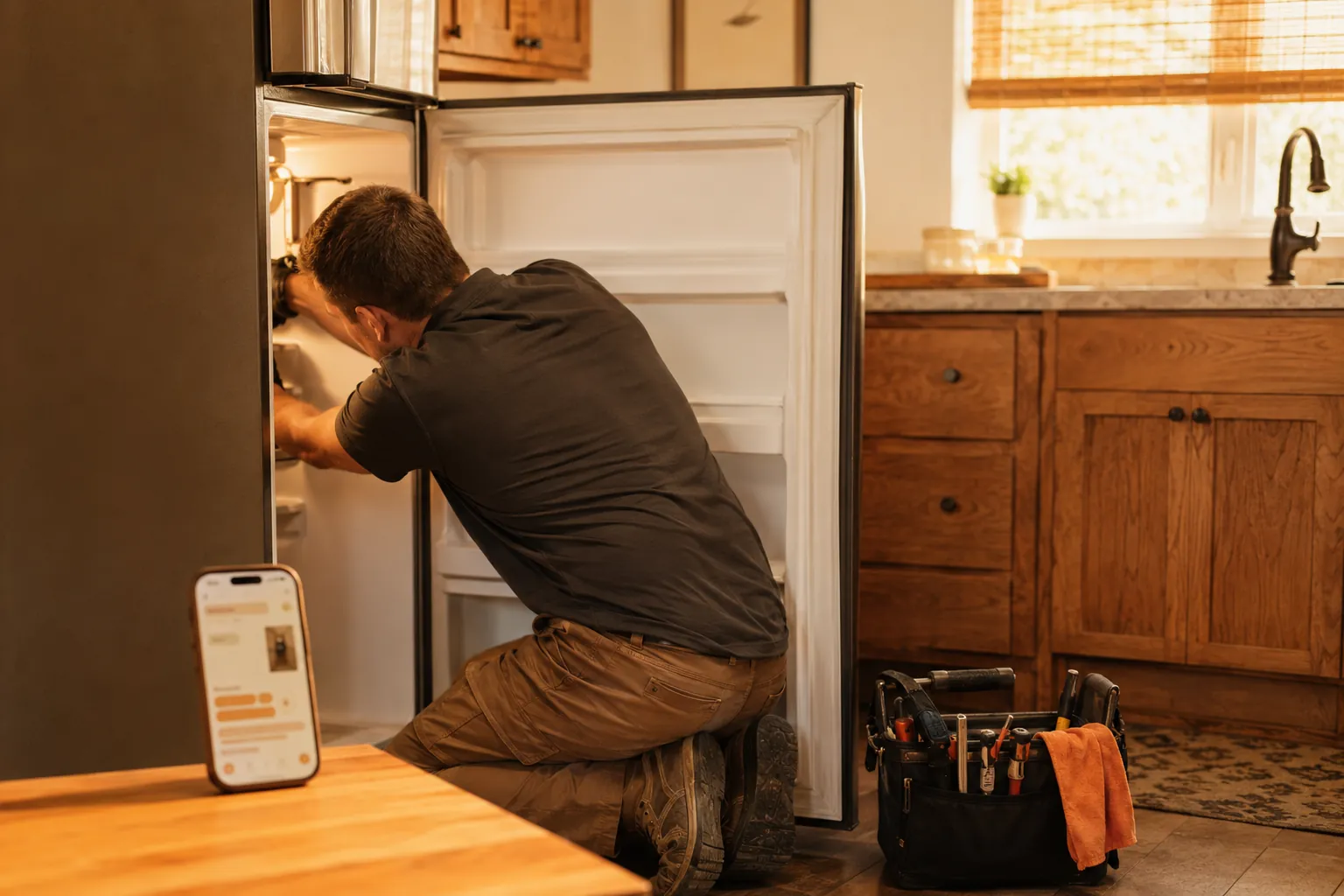
A fridge stops cooling at 9 PM. The freezer is full of meat, and the customer can already feel the panic setting in. They do not call one shop and wait. They text three, fill out a web form on a fourth, and book whoever answers with a real question first.
You are still on your last job when that text lands. You see it two hours later. By then the meat is the least of it. The job is gone, booked with the shop that replied while you were elbow-deep in someone else's washer.
That is the trap in appliance work. The intake is long, and the lead is impatient. You need a pile of details to even quote the job, and the customer has moved on before you can ask for any of them.
Why appliance intake is harder than most trades
Plenty of trades can book on a single line. Appliance repair cannot. The real intake is five things: brand and model, warranty status, food-at-risk triage, the repair-vs-replace question, and whether the work has to run through an authorized channel. That is five separate things to nail down before you know what truck stock to grab.
Get the brand and model and you are halfway to the part already. Miss them and your callback is just the start of the questioning, not the booking. The customer who texted four shops is not going to sit through your intake on the phone an hour late.
The owners who live this know how tight the math is. Eugene, an appliance servicer who blogs as Lorainfurniture, says it plain: "Number one drawback of being a servicer: You don't work, you don't get paid." A single job is thin once you net it out. It does not survive a wasted truck roll. You need to know what you are walking into before you go.
Brand and model: the part question starts here
The single most useful thing you can pull off a cold lead is the model number. It tells you the part, the common failure, and whether you stock it. A newer Samsung fridge that is not cooling is one roll. A fifteen-year-old unit with a tired compressor is another. You want to know which one before you load the van.
So the first reply should ask for it. Not "we got your message," but the real question: what brand, what model, what is it doing. Most people can find the model sticker inside the door or on the back. If they send a photo of it, even better. Now your callback opens with "I've got the part for that" instead of "so, what is it."
Warranty and authorized work: check before you roll
Warranty status changes the whole job. If the unit is under manufacturer warranty, the work may have to route through an authorized channel, and you do not want to roll a truck only to learn the customer expected the maker to cover it.
Authorized work also pays differently. Kent Berry, who runs KBs Appliance Repair, said it plainly about home-warranty jobs: "It might keep you above water while you're just starting off, but you don't get to charge as much money for them either." Knowing the warranty picture up front lets you decide which jobs to chase, and how to price the ones you take. That is a decision you want to make from the lead, not from the driveway.
Food-at-risk and floods: triage them to the top
Some appliance calls are slow. A dishwasher that leaves spots can wait until Thursday. Others cannot. A fridge full of food going warm, a washer leaking onto a hardwood floor, a dishwasher that flooded the kitchen at 9 PM. These are urgent, and they are usually the better-paying work.
The trick is to spot the urgent ones the second they land, then push them up the list. A lead that says "food is spoiling" or "water is on the floor" should never sit behind a routine spot-check call. If you can catch that flag at intake, you book the panic jobs first and let the slow ones wait their turn.
Repair-vs-replace: the question the customer is already asking
Half your callers are quietly wondering if the unit is even worth fixing. They have heard a compressor is no small repair, and a new fridge is not that far off. So the repair-vs-replace talk is part of the job whether you want it or not.
You cannot have that talk without the facts. The age of the unit, the brand, the failure. On an older fridge, a big part swap can cost close to a new one, so the replace math gets real fast. If your intake already captured the brand, model, and symptom, you can give an honest steer on the first real call. The customer trusts the shop that tells them straight, even when the answer is "this one is not worth it."
The catch every shop hits
None of this is news to an owner. You know exactly what to ask. The problem is being free to ask it the moment the lead comes in.
Appliance work is hands-occupied. You are inside a machine when the phone buzzes, and you cannot stop to run a five-point intake on every text. Eugene names the squeeze: "You simply can not work an 8 hour day. Sure, you can do service calls for 8 hours, but what about scheduling? ordering parts?" The intake is one more thing competing with billable hours, and it always loses to the job in front of you. That is the deeper bind of running the shop alone, which is its own story in the one-man-shop trap.
And the lead does not wait. Booking a caller on the first contact lands the job far more often than calling them back later. Every owner has seen it. The shop that asks the right question first usually wins the job.
How SvarKlar catches the intake for you
This is the gap SvarKlar is built to close. When a text, a web form, or a direct message comes in, it replies in seconds, day or night. Miss a call, and it texts that caller right back. You do not have to be free, because it is doing the asking while your hands are full.
And it asks the appliance questions, not generic ones. The brand and model, what the unit is doing, whether food is at risk or water is on the floor. Enough to open the repair-vs-replace talk on the first real call. It books the routine jobs, flags the urgent ones, and sends anything unclear straight to you with the full context attached. You open your phone to a clean lead with the model already captured, not a cold voicemail.
SvarKlar works where your customers already are. It replies to your texts, web leads, and direct messages in seconds, and it texts back the callers you miss. For a trade where the customer is already texting four shops, that is the channel that wins the job. If you want the wider picture, we cover it in what an AI receptionist does for a service business and in how SvarKlar works.
It is built and run by hand. Fred sets it up around how your shop actually works, the questions you ask, the way you book. Not a faceless platform that signs you up and disappears.
Where this fits in your week
Catching the intake early is the same fight as catching the lead at all. The after-hours fridge call, the missed call from the job site, the choice between leads you own and leads you rent. They all come down to one thing: being there with the right question when the customer is ready to book.
If your nights and weekends are leaking the best work, start with after-hours emergency leads. If the calls pile up while you are on a job, read missed calls on the job. And if you are weighing paid platforms against your own pipeline, paid leads vs owned leads lays out the trade. For the wider picture of this trade, the appliance repair hub ties it together.
So the next time a fridge dies at 9 PM and the customer is texting four shops, you are the one already asking for the model while the others are still asleep. Your callback opens with the part in hand. Theirs opens with "so, what is it," an hour too late.
Want to see how it would handle your own inbound? Book a call or see how the service works.