
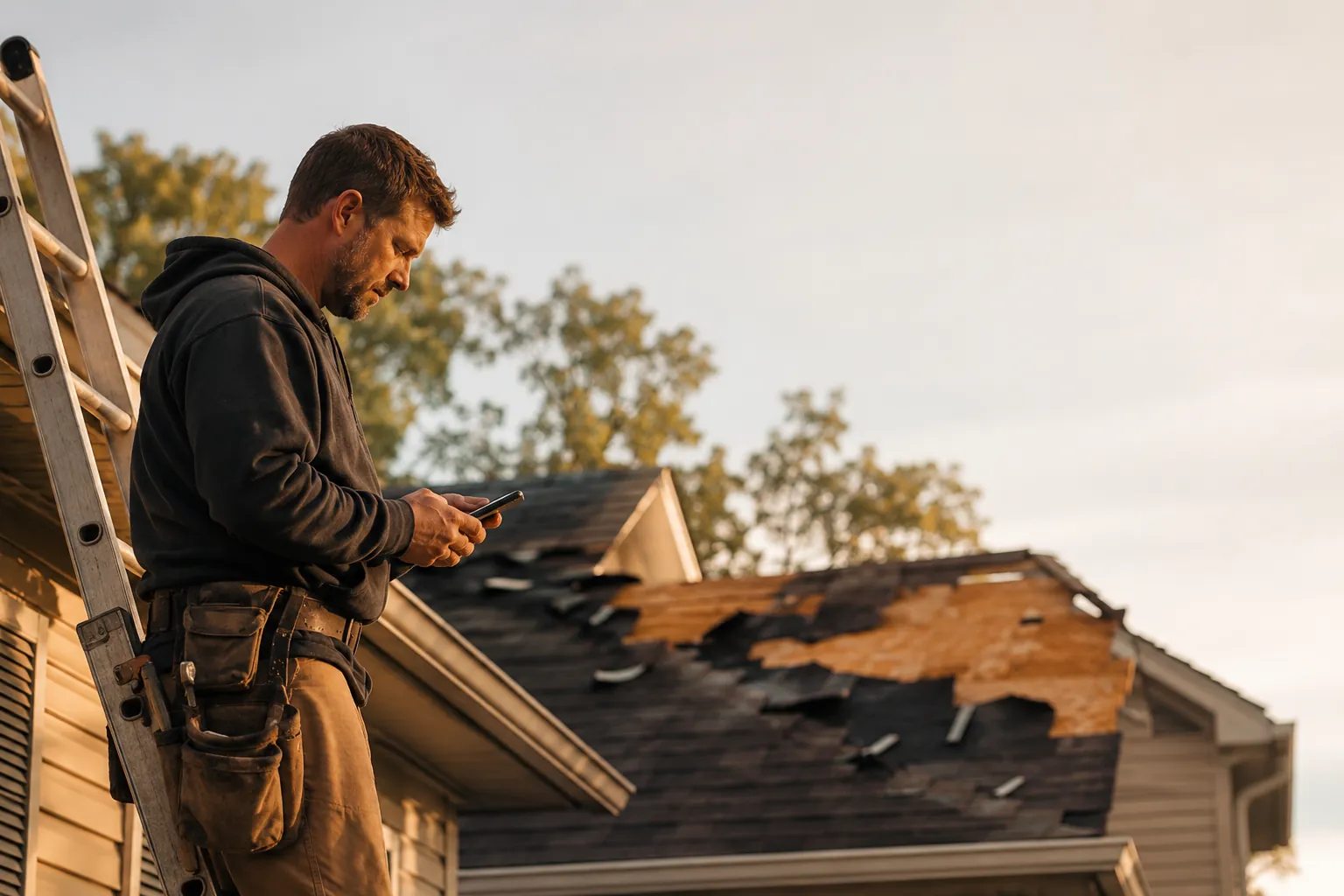
You are two hours into a tear-off with the nail gun going, and the phone is buzzing itself across the truck seat. By lunch it has gathered a string of missed calls and one homeowner who texted twice. Someone needs to write down what each of them reported before you decide who gets a personal call back, and today that someone is you, on a ladder.
One r/Roofing commenter wrote: "Roofing is a constant job. Never enough hours in the day, never enough help. I can miss a few calls". A separate Denton roofer wrote: "...We've always relied heavy [sic] on referrals and a bit of door knocking after hail hits, but I'm getting real tired of chasing storms every season."
Compare staffing with the workload you can serve
Count how many weeks need extra coverage and which office tasks continue between storms. Compare wages, training and coverage hours with a service quote for the same work. One r/Roofing commenter reported paying $80 a month for a live answering service and calling leads back from a personal line, so get a quote for your own hours before you trust anyone's number, including that one.
Be honest about the robot-voice pitch
Some roofers distrust AI phone agents. One commenter wrote: "An AI assistant would lose more jobs than missed calls." The objection is a real one. Agree how the AI identifies itself on the phone, when it stops guessing and how a caller reaches a person.
SvarKlar answers calls and texts back the ones it misses. Frederik sets clear rules for uncertain answers and requests for a person. Philip Portman, founder of the texting vendor Textdrip, argued for written follow-up in Roofing Contractor magazine: "Phone calls go to voicemails, and emails are ignored. However, a text message? It gets seen, and people respond."
What one crew actually gets
SvarKlar replies on the channels agreed with your crew. Once you set your emergency rules, a reply to an emergency starts with safety, before any question: stay off the roof; if water is near a light fixture, outlets or a sagging ceiling, leave that room; for a downed power line or a tree through the house, call 911 or the utility first. Then it asks for the address, reported damage, active water and a callback number. Urgent reports follow your handoff rule; a roofer confirms inspection order and any visit. Every plan includes a generous monthly AI allowance. No per-minute or per-message charges. If you get close, we tell you first and agree what's next. For first-reply rules, see how fast to reply to leads.
You keep your crew lean and your hands on the roof. The phone stops being the thing that decides how big a storm season you actually get to have. For the piece of this that covers sorting a storm's worth of calls, see leak patch or full replacement triage.
Is an AI receptionist worth it for a one-crew shop?
Yes, if storm season costs you calls you cannot physically answer and nobody else in the shop picks up the phone. No, if someone already answers every call within a few minutes and the leads that slip are not storm leads. To check it against your own books, count enquiries, completed inspections, booked jobs and gross margin from the last storm. A made-up example: a crew books one extra $9,000 roof in a season because a text went out while everyone was on a ladder, and its margin on that roof is 30 percent, so $2,700. If twelve months of coverage cost less than that, the extra roof paid for it. If you cannot point to a single lead you lost that way, wait.
Agree which channels to cover. Review what callers report, give them a clear next step and have a roofer confirm any inspection.
Want to see how it would handle your next storm surge? Book a call or see how the service works.
More guides like this are collected in the roofing resource hub.