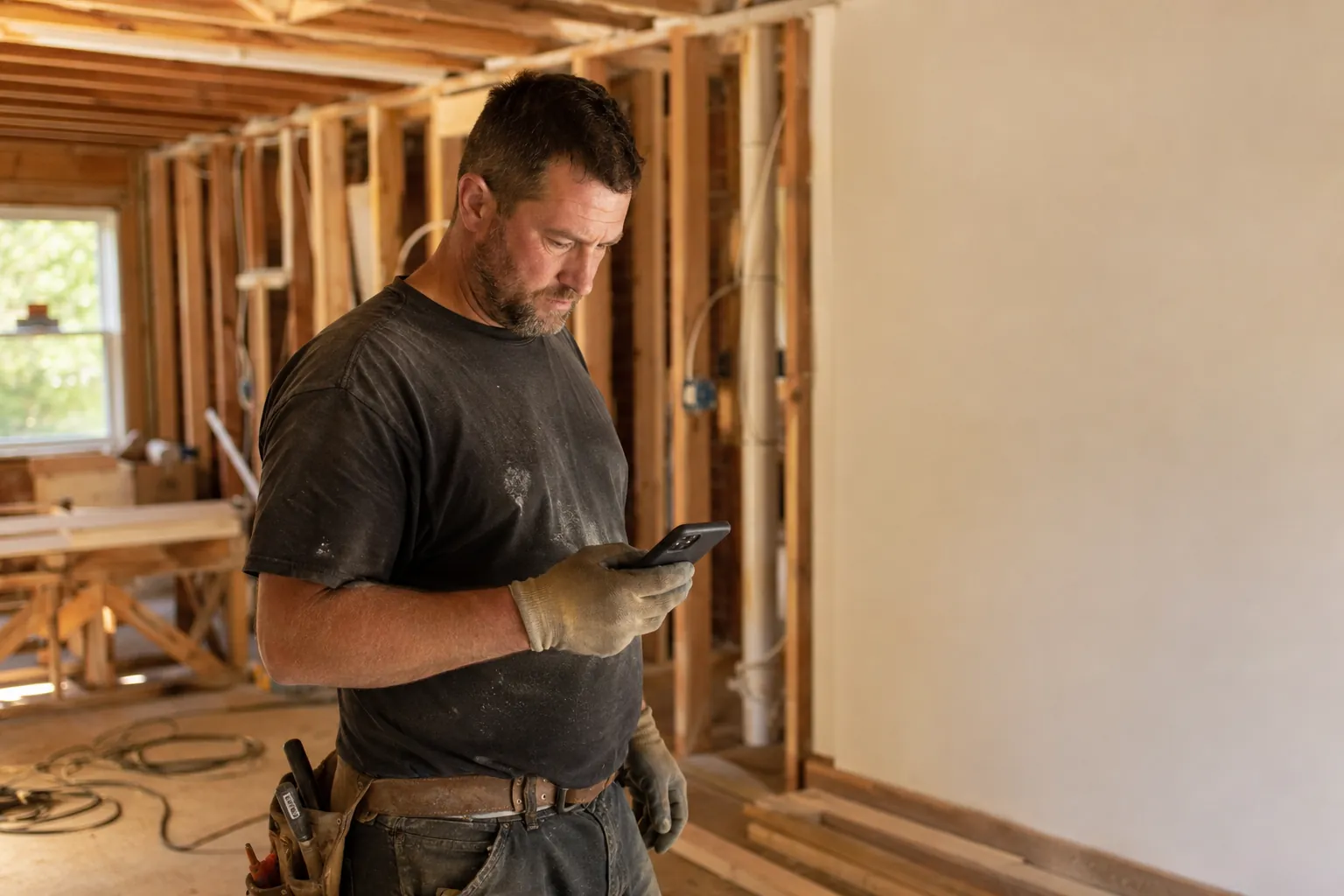
You pick up, still half under the sink. The voice on the other end skips hello. "Yeah, what do you charge to redo a bathroom?" No address, no timeline, no idea if the tile is coming up or just the vanity. Just the number, right now.
You have had this call a hundred times. And you know how it usually ends. You throw out a range, they say they will think about it, and you never hear back. The job that was never really a job just ate ten minutes you did not have.
Steve, a Californian handyman with more than twenty years on the tools, puts it as plain as it gets in an interview. "If somebody immediately mentions price on the phone, don't even waste your time." That is not him being rude. It is twenty years of pattern. The caller who leads with price is hunting for the lowest number, and that hunt rarely ends with you.
Why price-first usually means tire-kicker
A real customer has a problem they want solved right. They care who shows up, whether you are licensed, whether the work will last. Price matters to them too, but it comes after they decide you are the person for the job.
The price-first caller has flipped that. They have not picked anyone. They are working a list, asking the same question down the line, and they will hand the job to whoever says the smallest number. You do not want to win that race. The job you win on lowball is the job you lose money on.
Look at the questions homeowners actually ask serious contractors before they hire. "How long have you been in business under the same name?" "Are you a licensed general contractor for residential construction [...]?" "Can you provide a list of references [...]?" Those come from a real homeowner hiring checklist, and not one of them is "what is your cheapest price." The buyer who is ready to spend asks about trust first.
Never quote the real job over the phone
Here is the trap. The price-shopper pushes for a number, and the easy thing is to give one just to end the call. Do not. You cannot price a remodel you have not seen. Quote high and you scare off a good customer. Quote low and you eat the difference when the job is bigger than they let on.
Steve's answer to the price question is a small script worth stealing. He tells the caller he will schedule them in, show up ready to work, and give the price when he gets there. His words: "I'll give you a price when I get there and if you like it, I'll go ahead and do the job. If not, you are not obligated." No pressure. No blind number. The price lands when he can actually see the work.
That is the move. You are not dodging the question. You are putting the price where it belongs, on site, where you can stand behind it.
Charge by the job, not by the hour
There is a money reason to hold the price for the visit too. Steve charges by the job, never by the hour, and he is open about why. "I try to get between $75 and $100 per hour. But I don't tell my customers this because I always charge by the job." His point: the same work read off a clock sounds like a lot, even when the job price is fair. So he never hands them an hourly number to argue with.
An hourly number on the phone invites a fight over the clock. A job price is just a job price. Caleb, who runs North Seattle Handyman and holds a general contractor license, is filtering for the same kind of customer. He set his rate to draw "clients [who] appreciate the work and can afford the service." Note who he is filtering for. Not the cheapest customer. The one who values the work.
So the price-first caller and the right-fit customer want two different things. One wants the lowest number sight unseen. The other wants the right person and will pay a fair job price once they trust you. Your phone screen has to tell them apart fast.
What to ask before you say yes to a visit
You do not need a long form. You need the few facts that show whether the job is real and worth a trip. A handful of questions sorts most of them.
- What is the actual job? "Redo a bathroom" could be a quick vanity swap or a full gut to the studs. Get the real scope.
- Where is it? Out of your area and the visit is dead before it starts.
- When do they need it? Someday is a tire-kicker. This month is a buyer.
- Have they had anyone look at it? If they are collecting five quotes, you know what kind of caller this is.
Ask those, and the bargain hunter usually disqualifies themselves. The real customer leans in and books the visit. You spend your in-person time only on jobs that can actually close.
Three ways to answer a price request
When a caller leads with price, you have three clean moves. Pick by how real the job looks.
- Give a rough range, then steer to a visit. For a common job you can bracket, a range is fine, as long as it ends at the visit. Something like: “Most bathrooms in that shape land in a range, but I price it exactly on site. Want me to come take a look Thursday?”
- Skip the number, book the visit. For anything you cannot see yet, do what the pros do. “I do not quote a remodel I have not seen, or I would be guessing. I will come look, give you a firm price on the spot, and you decide from there.”
- Decline or redirect. Wrong trade, wrong area, or a caller who only wants the lowest number: let them go, politely. “That one is not really my lane, but here is who I would call.” You keep your time for the jobs you can win.
The point is the same across all three. You never hand a blind price to a job you have not seen, and every real lead ends on your calendar, not on a phone quote.
The catch: you cannot ask any of this from a crawl space
All of this works only if you are there to do it. And you are not. You are the one swinging the hammer. Steve names the real cost of the one-man outfit: "The one downside is that you have to do all the work yourself." The phone competes with the tools all day, and the tools usually win.
So the screening never happens. The price-shopper hits voicemail and moves on, fine. But the good lead hits the same voicemail and moves on too. You lose the tire-kicker and the real job in the same dead call. That is the trap we cover in the one-owner trap, and missed calls on the job site get their own breakdown in a missed call on the job.
Let the screen happen without you
This is the part SvarKlar handles. When a text or web lead comes in, it replies in seconds and asks your qualifying questions for you. The job, the location, the timeline. Miss a call, and it texts that caller right back with the same questions. The price-shopper who just wants a number gets sorted out. The real lead gets booked for the visit, where you give the price in person.
It replies to texts, web forms, and direct messages, and it texts back the callers you miss. Anything urgent or unclear comes straight to you. You get the full thread, so you never lose a real job to a robot guessing. You decide the price on site, the way Steve and Caleb both do. SvarKlar just makes sure the right caller is sitting on your calendar when you get there.
If you are weighing this against buying leads off a platform, that is a different fight worth reading, and we lay it out in paid leads versus answering. The short version: a screened inbound lead beats a bought one you still have to chase. For the wider how-fast question, see how fast to reply to leads.
Next time a caller opens with "how much," you have your move. Hold the number. Ask the four questions. Book the visit and price it on site, the way Steve does. The bargain hunter drops off on his own. The customer who values the work shows up on your calendar, ready to pay a fair job price.
Want every inbound lead screened and the real ones booked while you stay on the tools? Book a call or see how the service works.
More guides like this are collected in our general contractor resources and across the AI receptionist guide.