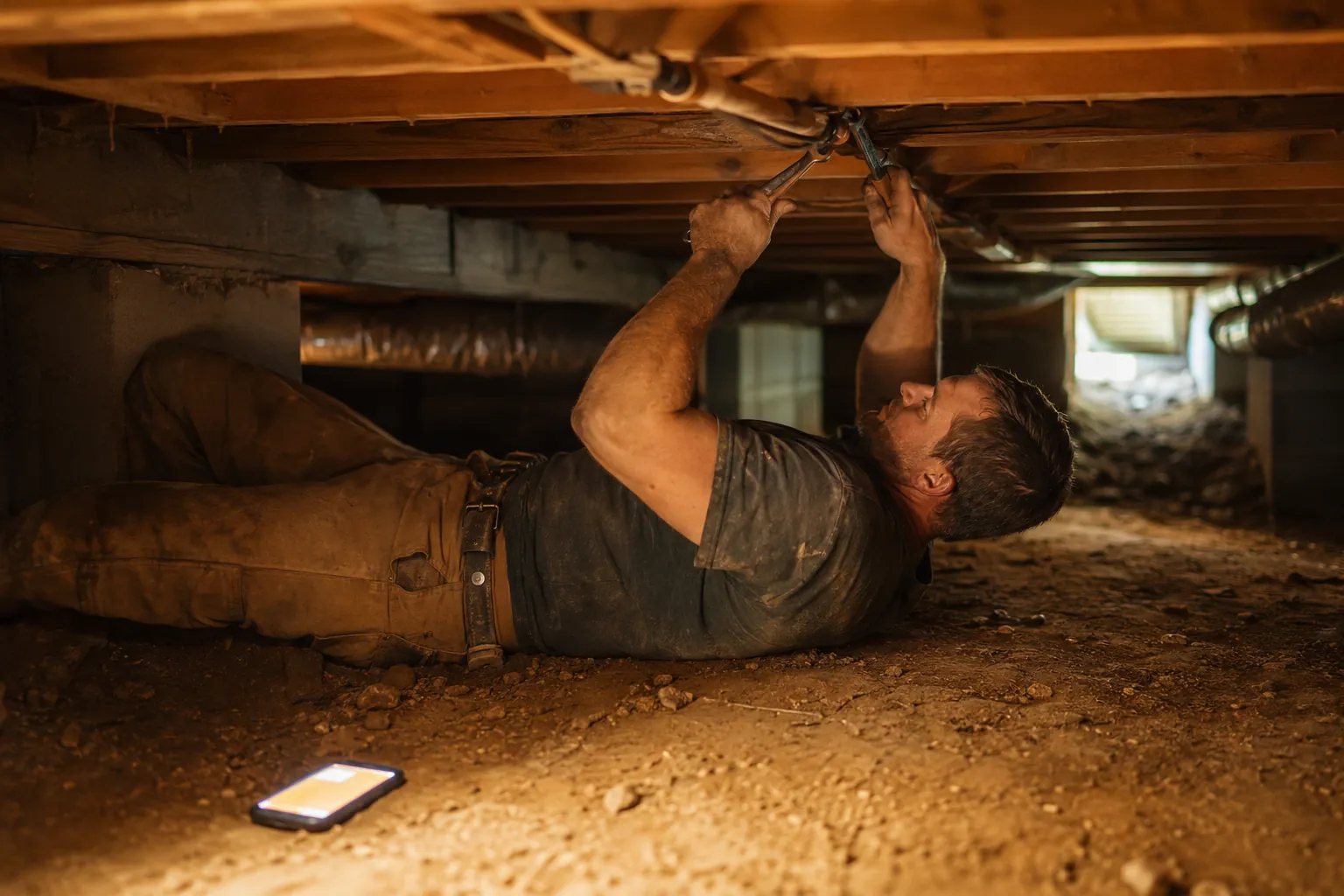
You are flat on your back in a crawl space. Dirt in your hair, both hands on a joist. The phone in your pocket starts buzzing. There is no way to answer it. So it rings out, and the caller moves on.
That is the trap of running the job and running the business at the same time. You are the one on the tools, and you are the one who answers the phone. The two cannot happen at once. When the work wins, the phone loses.
The first contractor to answer gets the job
Steve, a California handyman with twenty years on the tools, put it plainly in an interview on the Handyman Startup blog. He said the number one mistake people in this business make is not answering their phone. Then he went further: “The first person that answers the phone professionally will get 99% of the business.”
Homeowners with a busted deck or a leaking roof do not call one contractor and wait. They call you, and if it goes to voicemail, they call the next name on the list. Whoever gets back to them first is usually the one who shows up and bids the job.
The pattern is well known in the trades. The first contractor to respond wins. Get back to a lead in the first hour and you are far more likely to turn it into a real job than the owner who waits half a day. You do not need a study to know it. Every owner has watched a slow callback lose a job.
You cannot pick up, so do not try
Here is the part most advice gets wrong. It tells you to answer the phone faster. You already know that. The problem is not that you do not want to answer. It is that you physically cannot, because you are under the house or up on the roof.
Steve named the hard truth of the one-man job: “The one downside is that you have to do all the work yourself.” There is no front desk. There is no partner who grabs the phone while you stay on the joist. So the answer is not to pick up faster. It is to get the lead a real reply without you stopping the work.
This is the trap behind running everything yourself. We dig into it in the one-owner trap, where the phone and the tools fight for the same two hands.
How a missed call still gets answered
A missed call does not have to be a dead lead. The moment a call rings out, the caller can get a text back right away. Not “sorry I missed you, call back later.” A real message that says you got their call, asks what they need, and offers a time. The lead never sits in silence wondering if anyone is coming.
And the call is only one way leads reach you. A lot of them come by text and by your website form now. Those should never wait until you climb out of the crawl space. They can get answered the second they arrive, while you keep both hands on the job.
This is what SvarKlar does, and it can do it for you. It works right alongside your phone, replying to texts, web-form leads, and direct messages in seconds, around the clock. Miss a call, and it texts that caller right back instead of letting them slip to the next name. You never start cold.
So you would still be the first to respond. You just did it without dropping your tools. Speed is the whole game here. We cover the real targets in how fast to reply to leads.
Answering service or missed-call text-back?
An answering service pays a human to pick up live, and the bill runs every month whether the phone rings twice or twenty times. SvarKlar answers the missed call and every text and web lead within seconds, asks the questions your jobs need, and books the visit, for a fraction of what a live service costs.
What happens the moment you miss a call
Here is the actual flow, so you can picture it on your own jobs.
- Instant text back. The call rings out and the caller gets a real text within seconds, one that names the job and asks what they need instead of a generic “we'll call you back.”
- A few real questions. What the job is, where it is, how soon they need it. Enough to know if it is a deck rebuild or a squeaky door.
- Book or set a callback. A clear job goes straight on your calendar. Anything that needs your own eyes gets a set callback time, so the lead is never left hanging.
- Urgent leads reach you fast. A burst pipe or a same-day job comes straight to you with the full story already gathered.
The caller who only wants a price sorts himself out in that first exchange, so you never burn a callback on him. More on that in price-shopper phone leads. And if you are weighing this against buying leads off a platform, we lay out that trade in paid leads versus answering.
But will a text feel cheap or robotic?
Fair worry. A clumsy auto-reply that fires “thanks, we got your message” and nothing else can do more harm than silence. It tells the homeowner you have a bot and no follow-through.
So the setup matters more than the tool. A good reply sounds like you, asks the questions your work actually needs, and never guesses a price on a job it has not seen. When the lead is urgent or odd, it hands off to you, with the full story, instead of pretending. It should never promise a contractor on site today if that is not true.
Built by hand for your shop
SvarKlar is not big software you fight with for months. There is no long onboarding, no contract you cannot leave, no per-job bill. Fred builds it for your business and runs it himself. It is set up around how you actually work: the questions you ask, the jobs you take, the ones you flag as urgent.
That is the underdog version of this. One person who sets it up by hand and stays on the hook for it, not a faceless platform that signs you up and vanishes. If you want the full picture of the role it plays, we lay it out in the AI receptionist guide.
You will never answer the phone from a crawl space. You do not have to. The lead can still hear back from you in seconds, get qualified, and land on your calendar while your hands stay on the job. The missed call stops being a lost job.
One call and we map the leads you keep missing on the job, then show you the reply that would have caught them. Book a call or see how the service works.
More guides like this are collected in our general contractor resources.