
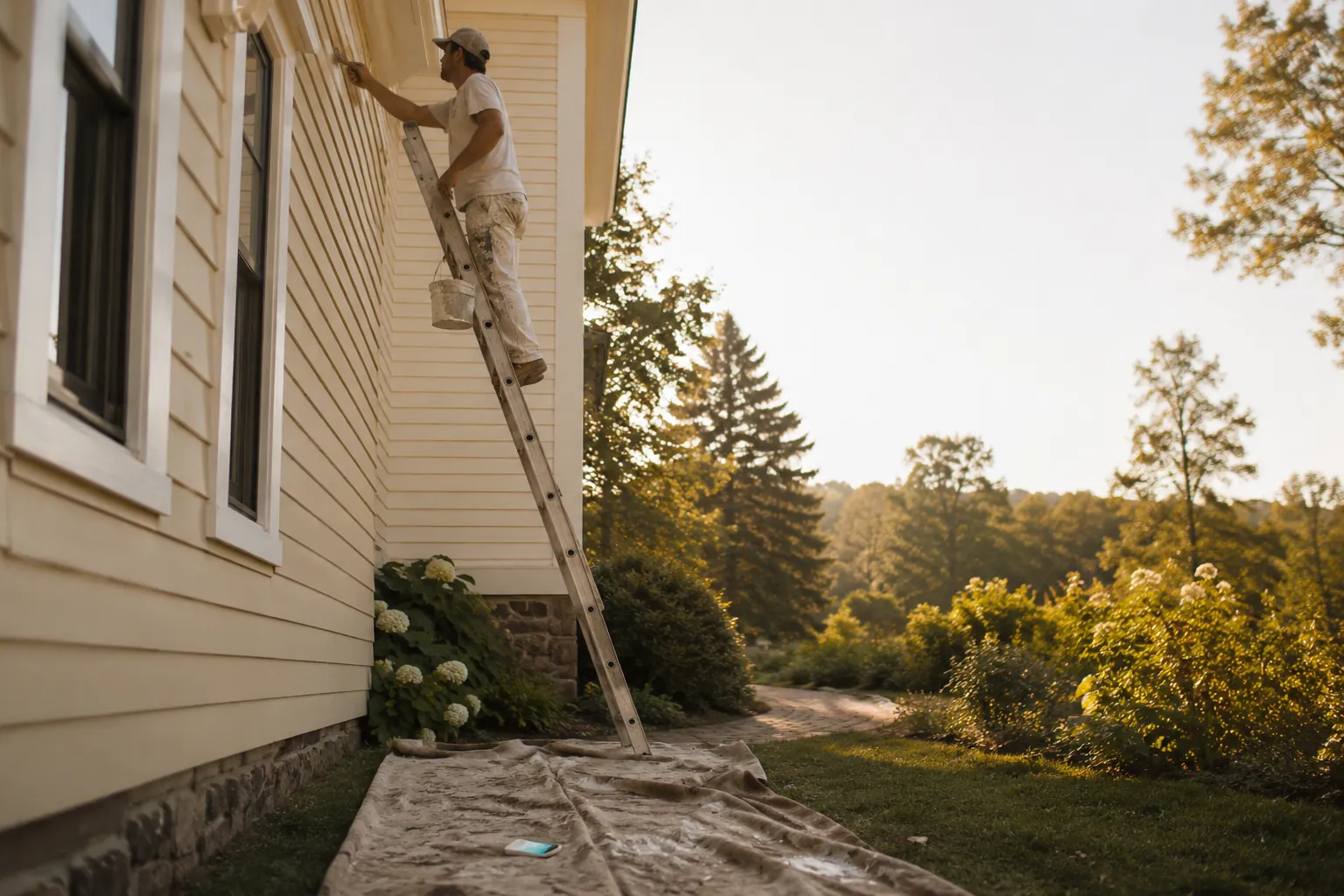
The phone is on the drop cloth while you are working above it. Leave it there until you can stop safely. The office problem to solve is what the caller hears while you finish, and how you find their details at your next break.
A missed call needs a clear reply path
In a Patch column about calling contractors, Cami Beiter wrote: “[…]I'll wait a few days and call again. If no contact is made, I go to the next one on the list.” That account does not show that every missed caller leaves. It does explain why an unclear callback process can frustrate a homeowner.
Give the caller one way to leave the job details and know what happens next. A voicemail greeting can invite a text. A configured text-back can ask for the painting work. Either route still needs someone to read the answer and own the next step.
What the first painting text should ask
Example for a shop offering a later callback:
Thanks for calling [shop]. We cannot pick up right now. Is the job interior or exterior, which rooms or surfaces need painting, and what area is the property in? Reply here with a good callback time. We will confirm when we can speak.
Keep the first message short enough to answer. Do not request a wall-by-wall measurement while the homeowner is still deciding whether you serve their area. Once they reply, ask about repairs or access only where it changes the next step.
Separate estimate visits from painting dates
A free calendar slot may be time for you to inspect a house, not time for a crew to start work. Label it that way. Before offering a visit, check the service area, who needs to be present and whether your travel time fits.
Move-in deadlines, peeling coatings, insurance questions or work outside your normal scope need your judgment. A message can record the request; it cannot promise that you will take the job. Final prices and start dates need the painter's approval.
Make the callback handoff usable
At a safe break, you should be able to see the name and number, property area, requested surfaces, timing, and unanswered question in one place. Mark who will call and when. If the requested time does not work, offer another instead of leaving it silently on the list.
Test the setup with a homeowner asking for trim only, another asking for an urgent whole-house repaint, and someone outside your area. Check that it follows your rules and leaves an honest next step for each. These are setup examples, not reported SvarKlar results.
Where SvarKlar fits
Frederik sets up the intake questions and handoffs with you. SvarKlar answers your calls and texts back a caller you missed. Calendar booking, price ranges and follow-up tasks are set up for your shop too.
Learn what an AI receptionist is, then compare the tasks with your current phone routine. Use the price-question guide for callers who want a number, and the estimate follow-up guide after you have seen the rooms.
Judge the cost from your own jobs
Count the missed calls that became real painting requests, then the estimates and paid jobs that followed. Use gross profit after job costs, not the whole invoice, when weighing the service fee and your time. A faster response does not guarantee a booking or a profit.
Choose your next safe callback window before you climb. Then make sure every new caller can leave useful details without needing you to reach for the phone mid-job.
Book a call to plan that handoff with Frederik. The painting hub has the other guides.