Most local marketing advice is vague. Post more. Get reviews. Stay consistent. None of it tells you what to actually do on a Tuesday afternoon between jobs.
This playbook is different because it comes with real numbers attached. A garage door company ran it and turned $18,000 into $1.7 million in 11 months. Every step below is what that company actually did, not a guess at what might work.
Credit where it is owed
This is not a SvarKlar case study. We did not run this campaign, and we did not touch this company's website. The story was shared by Sarvesh Srivastava, who has been a guest on The Edward Show podcast twice already. Host Edward Sturm put the numbers out publicly, with credit to Sarvesh attached.
You can watch the original post yourself: the Instagram reel from The Edward Show. Everything in this article is our summary of that real story, written for any service company owner who wants to run the same playbook.
The company before the playbook
Before any of this work started, the garage door company was struggling to get calls. Work came from word of mouth and whatever referral happened to land that week. The owner was close to shutting it down.
After the playbook ran, the same company was booked out weeks in advance. It started turning away low-ticket jobs it no longer needed to take.
Step 1: Collect real reviews, fast
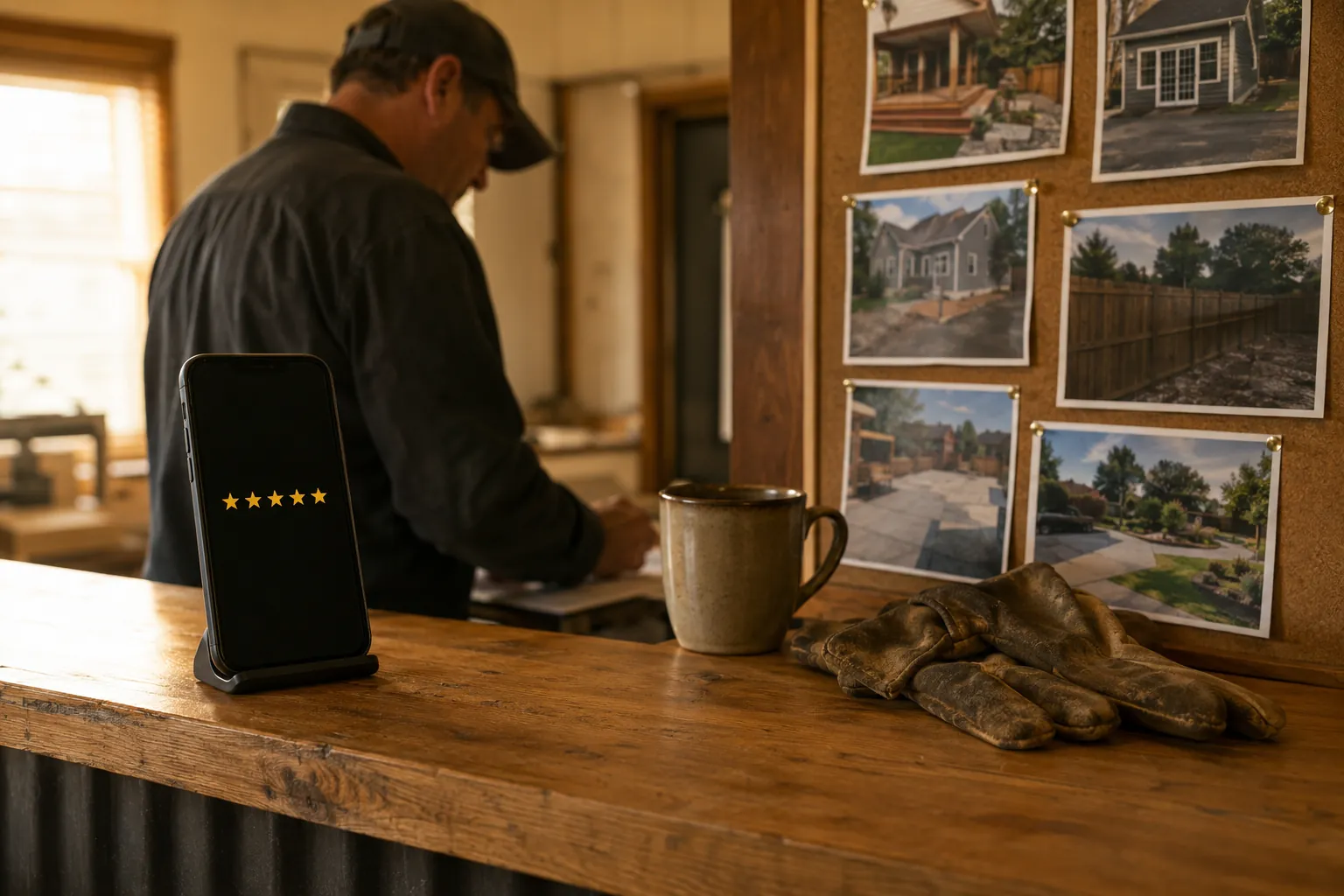
Every local company needs proof before a stranger will pick up the phone and call. The playbook started with reviews. Not hundreds of them. Just 10 real ones, collected as fast as the company honestly could.
Ask every happy customer right after the job is done. A text with a direct link works better than a sign on the truck or a line at the bottom of an invoice. Real words from a real customer do more for trust than anything you could write about yourself.
Step 2: Use real photos, not stock images
A stock photo of a smiling technician holding a clipboard fools nobody. People can tell, and it makes a real company look less real.
The playbook swapped every stock photo for real ones: real trucks, real jobs, the real crew standing next to the work they just finished. It costs nothing but a phone camera and five minutes at the next job site.
Step 3: Build one page per city, per service
A page that tries to rank for every city and every service usually ranks for none of them. The playbook killed the generic service pages and replaced them with pages built around one exact search.
One example from the campaign: "Affordable Garage Door Repair in Houston - Same Day Service, No Hidden Fees." One city. One service. One clear promise, right in the page title.
Do the same for your own company. A plumber writes one page for drain cleaning in their own city, not one page called "Our Services" that tries to cover everything at once.
Step 4: Fix the links between your own pages
The garage door company's website had zero links connecting its own pages. The homepage never pointed to the service pages. The blog never pointed to anything at all. Every page sat alone.
The fix was simple. Every service page links back to the homepage. Every blog post links to the right service page. The homepage links out to every city and service page it has. Nothing is left stranded with no way in.
Step 5: Trade links with other local trades
Earning a good link is not about begging a big website for attention. The playbook leaned on real, local relationships instead: guest posts on real local blogs and industry sites, plus simple link swaps with the trades already sending each other work.
A plumber links to the electrician they call on for every rewiring job. That electrician links back. Two real companies, one honest trade, and a link that actually means something to the people reading it.
Step 6: Stop chasing national keywords
The garage door company used to chase terms like "best garage door" and "top garage doors" nationwide. Those searches sound impressive and lead nowhere. Nobody local is typing them, and the company could never serve every city in the country anyway.
The playbook dropped those terms and went all in on searches tied to one real place, like "garage door repair Austin." Specific, and tied to a city where the company could actually show up and do the job.
The blind spot in this playbook
Follow every step above and more calls start coming in. More leads hit the phone, the web form, and the text line, often while you are still on a job with your hands full.
That is the part local marketing advice usually leaves out. A ringing phone that nobody answers is a lead walking to the next name on the list. All the work above to get the phone ringing means little if it rings and nobody picks up. You can read more on how fast a new lead actually needs a reply, and what a missed call really costs a company your size.
This is the gap SvarKlar is built to close. It replies to every new lead in your own voice, in seconds, whether you are under a garage door or three jobs deep on a Friday. You keep running the marketing above. SvarKlar makes sure every call it earns actually turns into a booked job instead of a missed one. See how an AI receptionist answers those calls for you.
The whole playbook comes down to proof and place. Real reviews, real photos, and pages built for one city at a time do the proving. Fixed links and real local relationships carry the rest.
None of it is about being famous online. It is about being the obvious pick to the people already searching in your own town.
If the calls start coming in faster than you can answer them, book a call, or see how SvarKlar works.
More guides like this are collected in SvarKlar Resources.