
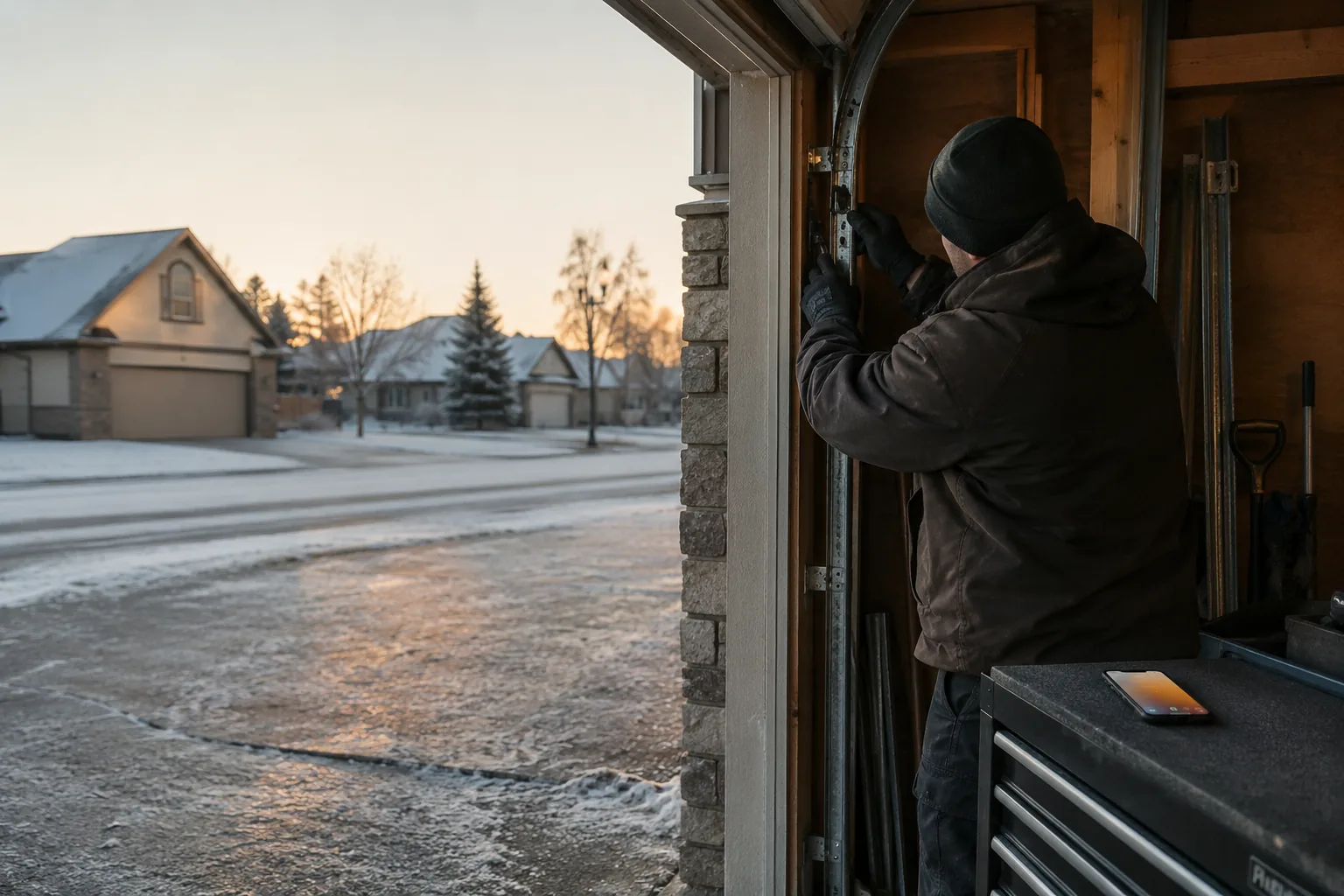
It is six in the morning and the temperature dropped overnight. A homeowner hits the button to back out for work. There is a bang. The door does not move. Cody Johnson, who runs Garage Door Doctor in Houston, describes that moment well on his shop's podcast: if you hear a big puff and it shakes your whole house it's probably the spring that broke.
Now their car is stuck in the garage. As Johnson puts it, if the spring breaks you're not going to get that garage door up.
They are late, they are stressed, and they are dialing. What happens when nobody answers is covered in the garage door voicemail problem.
If several calls arrive during the same cold spell, the work and the phone compete for your attention. Your own call log will show whether that is a real seasonal peak for your area.
What cold weather can change
Clopay describes several cold-weather faults: a bottom seal can freeze to the ground, lubricant can harden, and springs can fail. Those are different problems with different repairs.
Before any question, tell the caller to stay clear of the door and the spring, and to call 911 if anyone is hurt. Then ask whether the door moves at all, whether the caller heard a bang, and whether ice is visible at the bottom. Do not ask them to force the door, touch the spring or test a heavy door. Clopay says a suspected broken spring needs a professional repair.
A phone description helps the technician prepare. It does not establish the cause, the right part or how soon a repair can be completed.
Plan the hours your callers need
A door fault may be noticed when someone leaves for work or comes home. That can be outside your staffed hours.
Use the time of past calls to decide who checks new requests, how soon they can reply and what happens when the crew is full. Do not promise overnight cover unless a person is available to provide it.
Compare actual job revenue with parts, travel, labour and after-hours costs. An urgent call is not automatically your most profitable job.
Write down what the caller should expect when the shop is closed. Our guide on handling after-hours garage door calls covers the intake side.
Give a missed winter caller a useful next step
A customer whose car is trapped may try another company while waiting. A clear reply helps them decide what to do next.
Ask for a callback number and the service address, then state whether you are offering a callback or a confirmed visit. Price, availability and trust still matter; the first reply does not guarantee the job. For the price question, see quoting a garage door repair over the phone.
In an Authority Magazine interview, Tommy Mello of A1 Garage Door Service stresses the value of answering calls. That is an owner's view, not a measured booking rate or proof that most shops ignore their phones.
The Lifted garage door podcast framed missed calls as one of the biggest lost revenue opportunities in home service.
In your busiest month, that leak runs the fastest.
You cannot out-hustle a cold snap
Compare the coverage each option can actually provide during the hours you need.
Keep attention on the repair while handling springs and other loaded parts. For the phone, compare a staffed desk, an answering service and agreed automated intake against your actual volume and needs.
Whichever option you use, give callers an honest next step when there is no slot left. An overflow plan is part of the setup.
What catches the winter overflow
SvarKlar can handle the written intake and missed-call replies you agree during setup. Define the channels, hours, expected volume and fallback when the shop has no capacity.
The intake asks what happened, the address, whether the car is trapped and how to reach the caller. Reported urgent or unclear problems go to your named contact. A person decides the priority and whether to send a technician.
Routine bookings follow the slots and permissions you approve. The caller should be told when a visit is confirmed and when they are still waiting for a person to respond.
Set a reply target you can support and keep the answer useful. Our lead-response guide separates practical targets from the limits of the published research.
What one cold week really costs you
Take one busy winter week from your own records. Count missed enquiries, confirmed jobs and the reasons other enquiries did not book.
Estimate the value using your own booking rate and margin. Do not count every missed call as a lost repair or add referrals that never happened. The missed-call cost guide shows how to make the assumptions explicit.
Catch even a few of those each cold snap and the season looks different. The work was already there. It was knocking on your phone while you were on a job.
Get ready before the first freeze
Before a busy week, check both the door-service plan and the phone plan. Agree the intake questions, escalation contact, available slots and overflow message.
Have a trained technician handle suspected spring faults. For the intake steps around those enquiries, read our guide on handling broken-spring calls.
Winter is not every shop's busiest season. Build the plan around your own area, service mix and call history.
Winter callers need a clear next step and safe advice. A useful intake plan records what happened, gives an honest callback or visit time and leaves repair decisions with a trained person.
Want winter leads caught while your hands are full? Book a call or see how the service works.
More guides like this are collected in our garage door resources.